


Quick—name every Drake #1 song you can name off the top of your head.
Perhaps you recalled “God’s Plan”, “Nice for What”, or “In My Feelings.” Combined, these three songs spent 29 weeks at #1 on the Hot 100 in 2018.
If you’re reliving 2016, you might remember, “One Dance”, Drake’s hit featuring WizKid and Kyla, or Rihanna’s “Work” featuring Drake. Those two songs owned #1 for 19 weeks.
How many #1 songs do you think Drake has had this decade? How many can you name?*
In his Slate column “Why Is This Song No, 1,” Chart expert and music critic Chris Molanphy observes this curiosity about Canada’s biggest Hip Hop export: Drake has had eight songs reach #1 on the Hot 100 from 2020 through 2023, including his recent response to the Kendrick Lamar feud, “Janice STFU”.
However, of Drake’s seven other #1 songs from this decade, all seven spent only 1 week atop the chart.
The Emergence of The Irrelevant #1
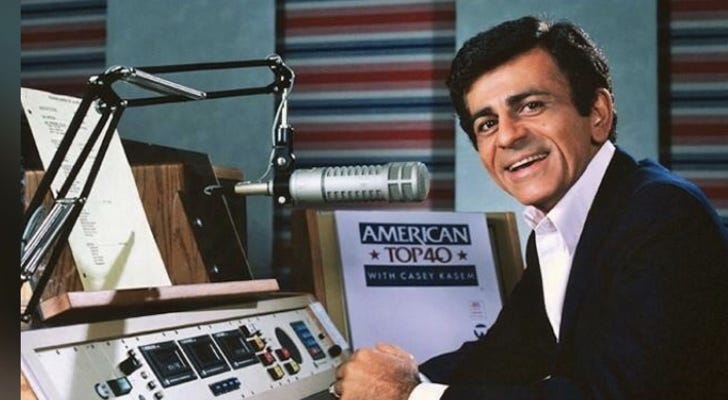
Back when Casey Kasem announced the week’s #1 song, that song had penetrated the awareness of anyone even vaguely paying attention to popular music. Some #1s remain iconic classics. Others received widespread derision even when they were #1. If you were alive and not residing at the Pines of Mar Gables, you knew the #1 song.
That’s because #1 song used to remain omnipresent for months.
My rule of thumb for a song to be relatively well known in its time, it needs to be a Top 10 hit for at least four weeks. We generally don’t get to know a song from casually hearing it once. We need to hear it over and over again for a period of time for our brains to store the song in long-term memory—whether we want it there or not.
Historically, since Billboard implemented electronic monitoring of song sales and radio airplay to compile the Hot 100, the #1 song remained in the Top 10 for an average of 16 weeks.
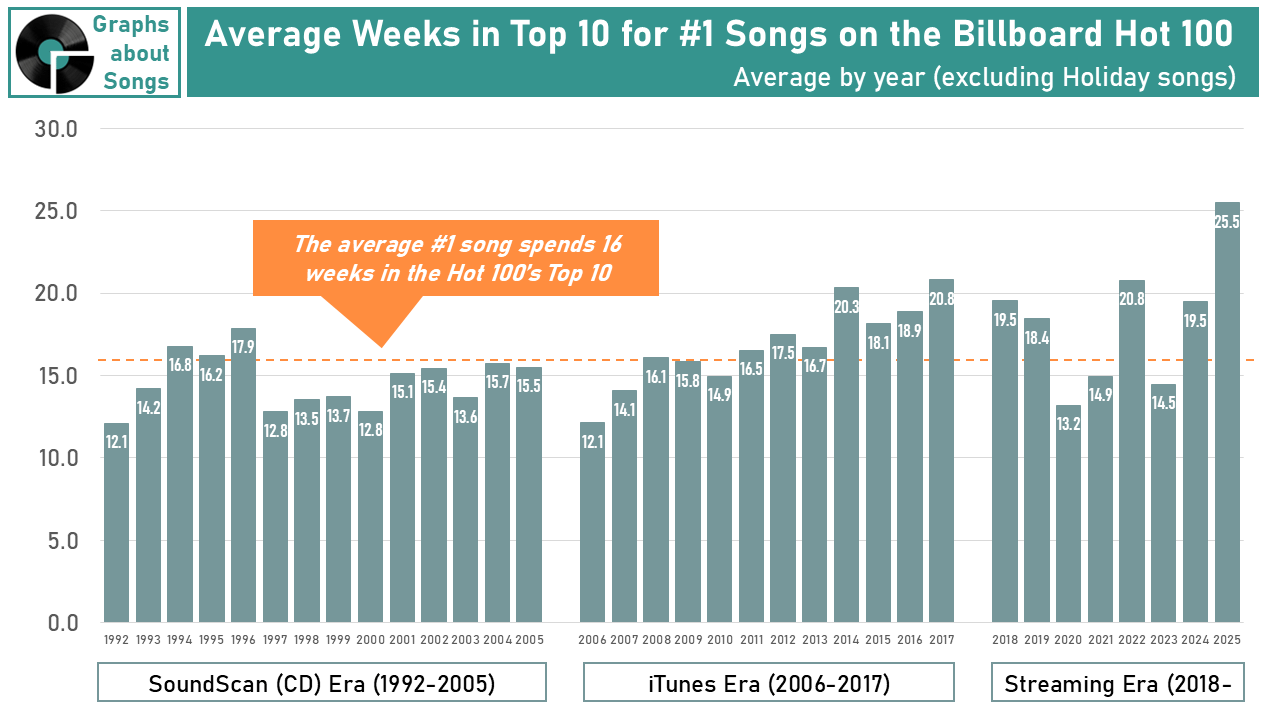
Before 2019. Only three #1 hits on the Billboard Hot 100 stayed in the chart’s top 10 for less than four weeks:
One was John Lennon’s “Whatever Gets You Through The Night,” a largely forgotten hit from 1974 that only lasted three weeks in the Top 10.
The other two were songs from American Idol contestants Fantasia (2004) and Taylor Hicks (2006). Their TV performances spawned throngs of fans to immediately buy their winning song on iTunes, but those sales dried up as soon as the show was no longer hot news.
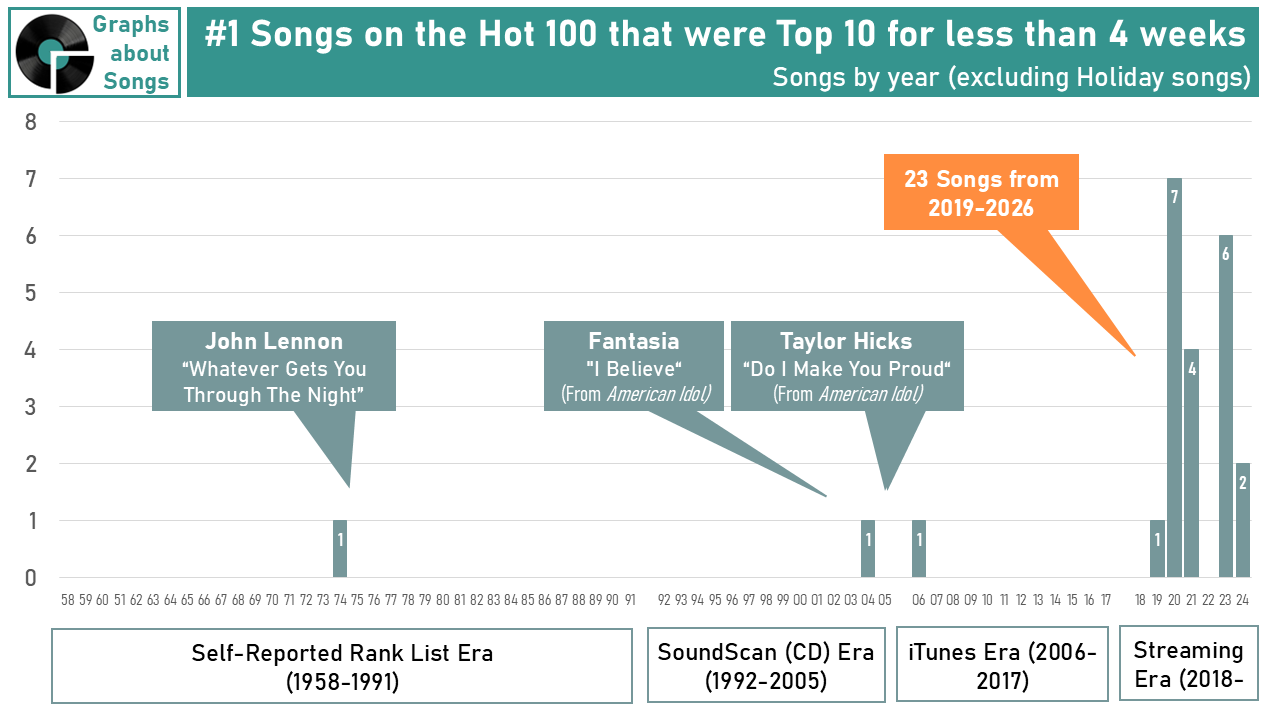
In short, if your song reached #1 on the Hot 100, you were guaranteed enough time in the Top 10 for your song to become well-known.
That changed in 2019.
Since streaming on services such as Spotify usurped paid digital downloads on iTunes, there have been 23 different songs reaching #1 on the Hot 100, only to fall out of the Top 10 entirely after fewer than four weeks. Somehow, these songs were the #1 most-consumed songs in America, only to be forgotten as soon as the following week.
That includes every #1 song so far this decade from Drake.
The King of the Irrelevant Hit
The chart below ranks the 24 artists with the most Top 10 hits on the Billboard Hot 100 from the week ending January 5, 2019 through June 13, 2026., segmented by how many of each artist’s Top 10 hits:
Stayed in the Top 10 for four or more weeks
Remained in the Top 10 for two or three weeks
Only were Top 10 for one week
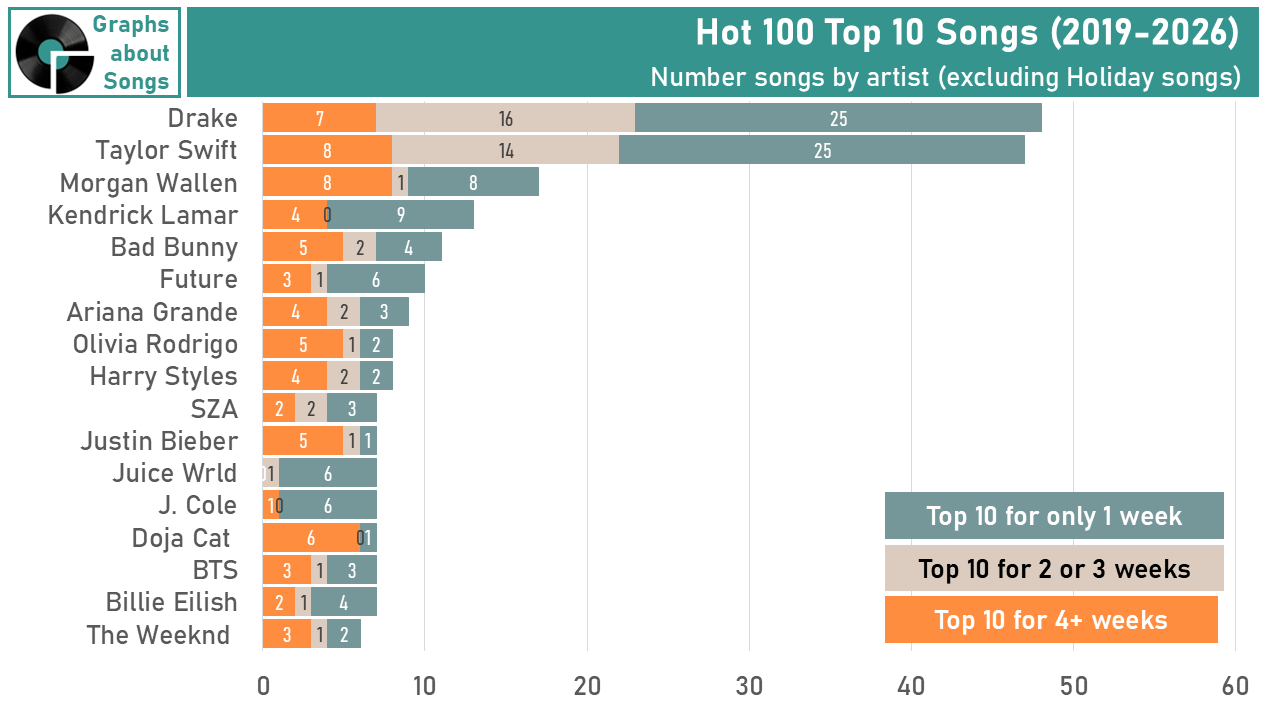
No one during this timeframe has had more Top 10 hits than Drake, with 48, However, only seven of Drake’s songs stayed in the Top 10 for four or more weeks, compared to 25 songs that were only Top 10 for one week.
That makes Drake the artist with more irrelevant Top 10 hits than any other artist during the streaming era.
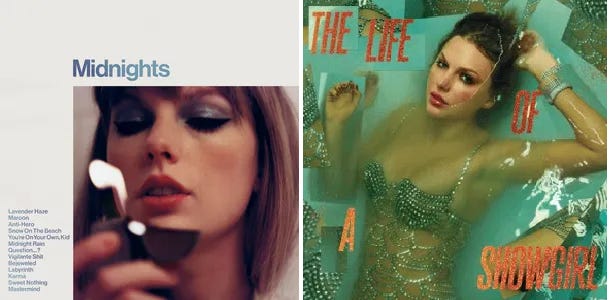
Taylor Swift is second with 47 total Top 10 hits from 2019 through 2026. She, too, has had 25 Top 10 songs fall out of the Top 10 after only one week. However, eight of her Top 10 hits have remained in the Top 10 for four or more weeks. Unlike Drake, Swift’s biggest hits have been massive, with “Cruel Summer” remaining in the Top 10 for 33 weeks and “Anti-Hero” for 28 weeks.
In contrast, the best Drake could muster since 2019 is keeping “Toosie Slide,” in the Top 10 for 10 weeks.
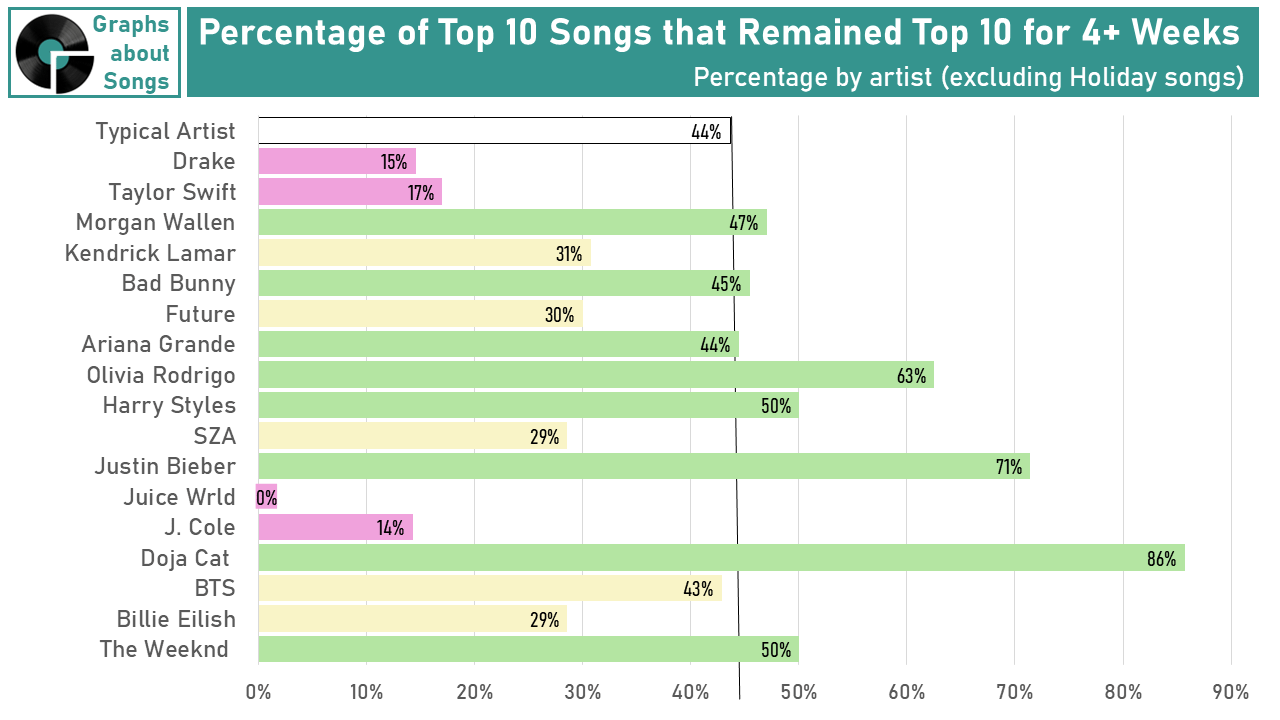
This chart shows those same artists’ percentage of Top 10 hits that stayed in the Top 10 for four or more weeks. Other than Juice WRLD or J. Cole (who both had significantly fewer Top hits overall), only 15% of Drake’s Top 10 hits since 2019 are “real” hits, based on my benchmark of four or more weeks in the Top 10.
How Streaming Created Irrelevant Hits
Streaming has made it easier than ever for an artist’s biggest fans to check out their latest music.
Thirty years ago, you had to go to the mall and spend $34 in 2026 money for an entire CD to check out your favorite artist’s new release, a commitment only the most avid fans would make sound unheard.
Fifteen years ago, you could buy that album on your laptop or your new smartphone, but you still had to pay up to $22 in 2026 money for the whole album. Perhaps you only bought the big track you’ve heard on the radio at that price, not the entire album.
Today, you can effortlessly listen to every single track on an artist’s latest project without spending anything beyond the streaming subscription you already have.
More fundamentally, we now don’t simply measure the moment you buy the CD or download the iTune: We measure every single time you play a song.
Drake Can’t Keep It Up
In this chart, you’ll see each artist’s Spotify performance in the U.S. from 2019 through 2026, including songs featuring other contributing artists.
On the left is the aggregate streams for each artist during the debut week for their songs.
On the right is the total streams for their songs for all weeks.
In other words, the chart on the left shows who turns out their fans the week they drop a new album. The chart on the right shows who attracts fans who keeps streaming a song week after week.
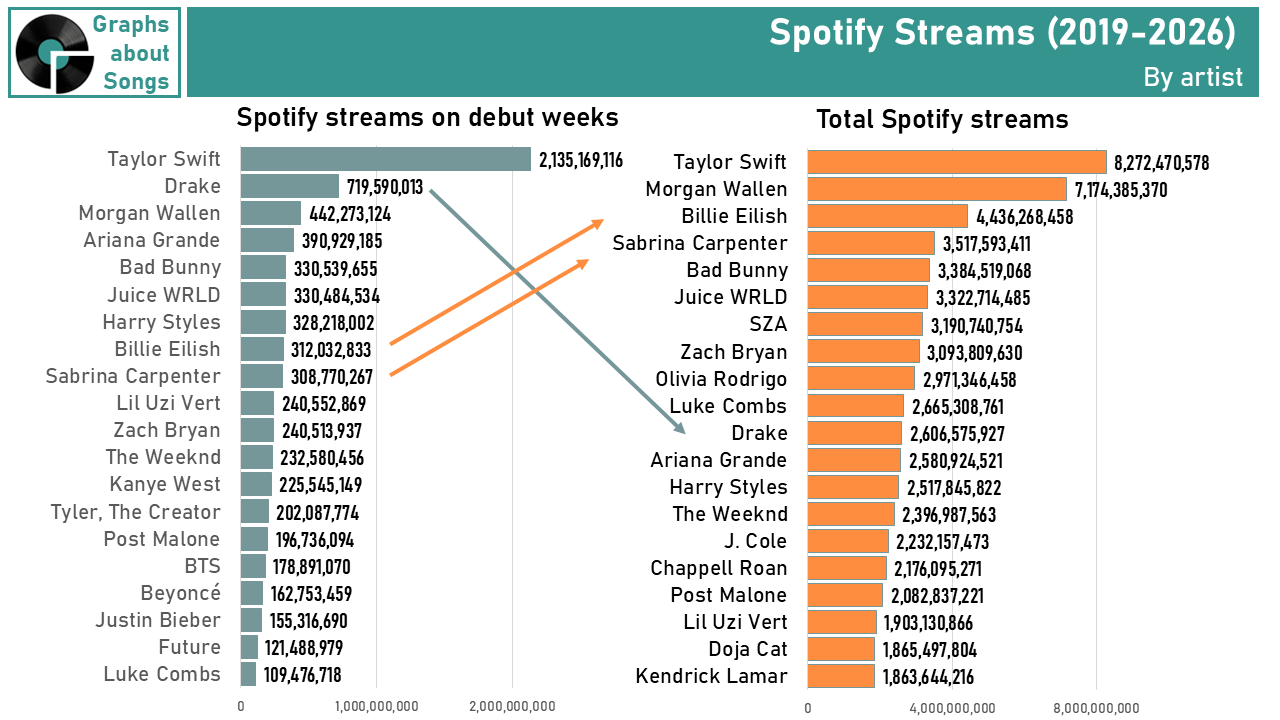
When it comes to debuting big and staying big, Taylor Swift is #1 on both charts.
The artist in second place for most debut week streams is Drake. But look where Drake is on the right—he’s only 11th place for total streams week after week.
In contrast, look at Billie Eilish and Sabrina Carpenter: They rank 8th and 9th, respectively, in most streams the week a song debuts. For total Spotify streams week after week, however, they rank #3 and #4, behind only Taylor Swift and Morgan Wallen. Or SZA, who isn’t even among the top 20 in Spotify debuts but is 7th in total streams.

Despite Kendrick Lamar’s efforts, Drake still has an ardent fan base who binges his latest releases. So does Taylor Swift, Morgan Wallen, and Bad Bunny.
The difference is those artists also attract a far bigger—albeit far less ardent—audience of causal fans in the weeks after their songs debut. That broader audience registers in radio research and keeps those songs on the radio for months. That broader audience also keeps playing their songs for months on their streaming service of choice.
The Hot 100 Never Measured Popularity
The Hot 100 is not a chart measuring how many people know and love a song. It is—and always was—a chart measuring consumption of each song. Back when the chart measured how many people bought a 45 and heard a song on Top 40 radio, the most consumed songs were also the most widely appealing songs.
Although radio exposure and song sales do still count, today, the Hot 100 is chiefly measuring how many times a song gets played on streaming. Because we’re now measuring plays—not people—streaming has broken the link between consumption and popularity. That’s because songs from established artists typically get the most streams the week they debut—but those streams are from a handful of passionate fans binging the song repeatedly.
The chart below compares the Spotify streams for a typical hit song from a major Pop artist with the percentage of Pop music fans who would typically be familiar with that song, as measured by radio audience research.
During the debut week, when the artist’s Stans seemingly can’t get enough of the new song on Spotify, the majority of Pop fans have never heard the song.
Fast forward eight weeks. Now, the vast majority of Pop fans know the song (and a lot of those Pop fans love it), but on Spotify, the song is garnering less than half the weekly streams it did the week it debuted.
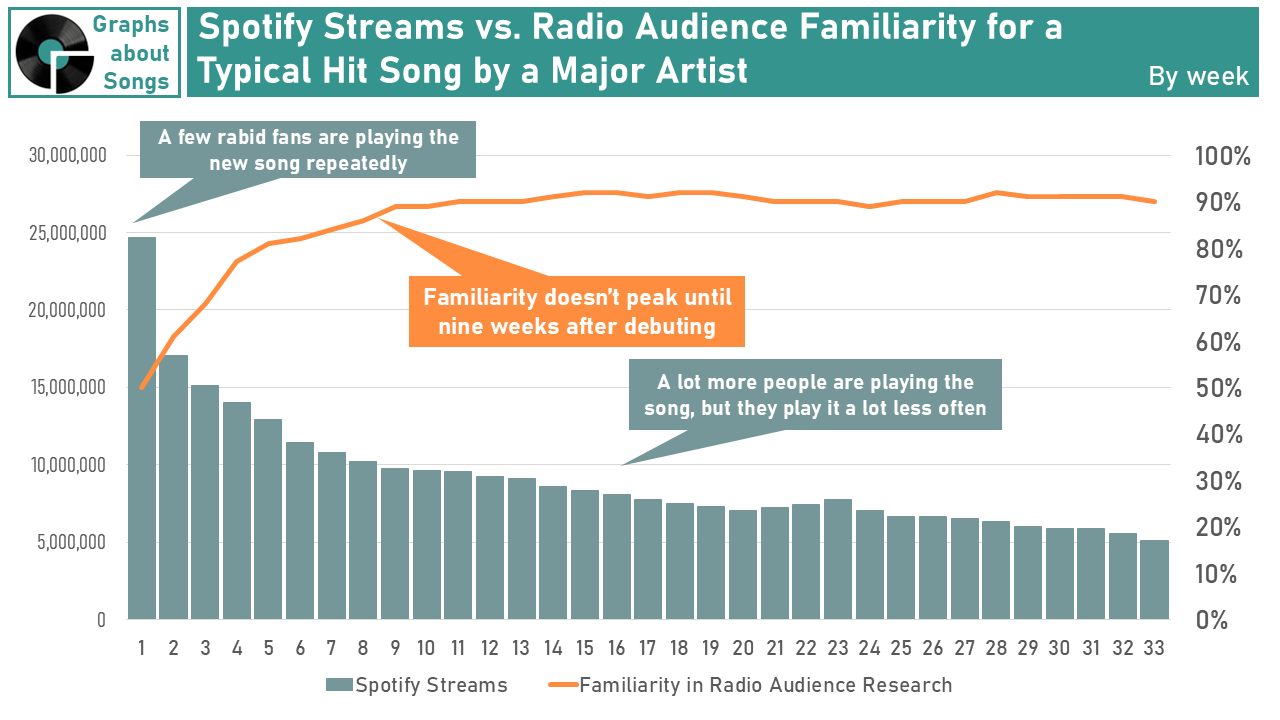
As causal fans of the song discovered it, they, too, started playing it on Spotify. But unlike the artist Stans who binged it as soon as it dropped, those casual fans slowly ramped up how often they played the song as they got to know it over several weeks. Furthermore, those causal fans never played the song over and over again the way the artist Stans did its debut week.
Streaming services don’t tell us how many different people play a song in the course of a week. Furthermore, fandom is a spectrum, not a binary. For conceptual understanding, however, the chart below estimates which streams from that typical hit song come from artist stands verses casual fans each week.
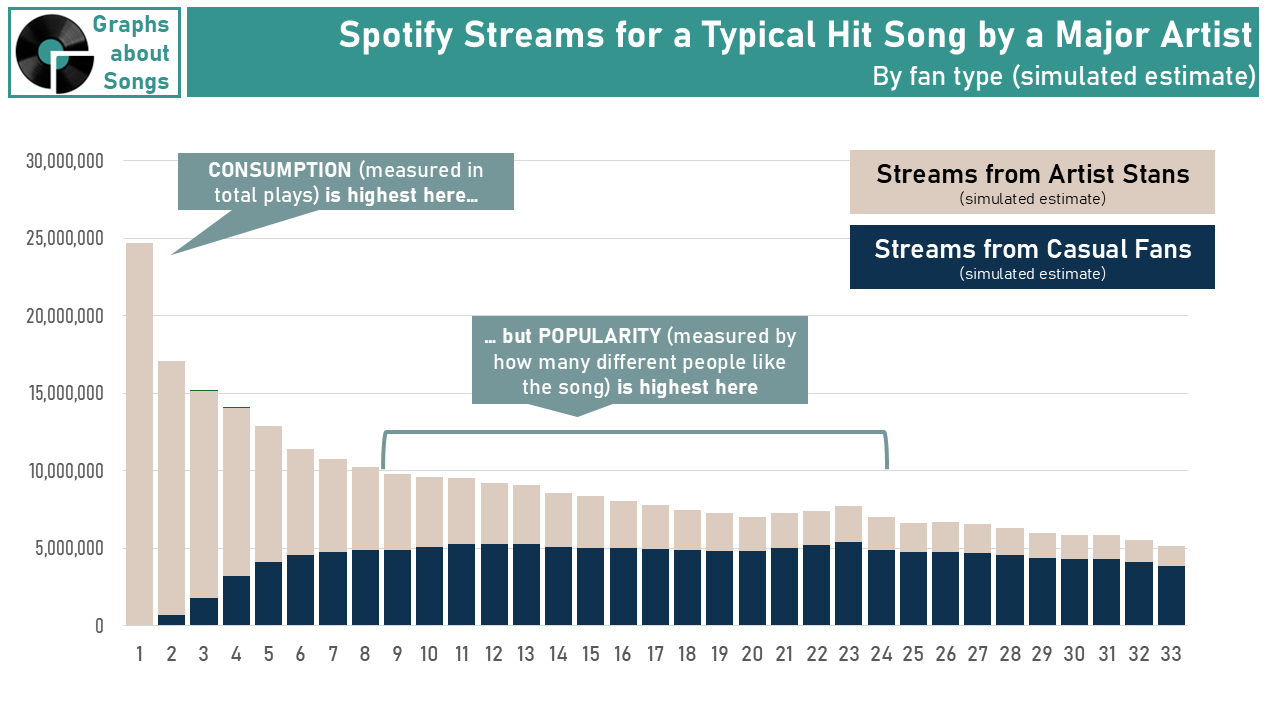
Since the Hot 100 tracks how many times streaming users play a song this week—not how many different people played it---the Hot 100 no longer inherently reflects how many individuals know and love a song.
The thing is, the chart was never supposed to measure popularity.
Consider THE SCOTTS, by THE SCOTTS (Travis Scott and Kid Cudi). It was the #1 song on the Hot 100 for the week ending May 9th, 2020. Then, it fell out of the Top 10 entirely. Examining its week-by-week Spotify streams shows how “THE SCOTTS” quickly faded compared to a mass-appeal hit:
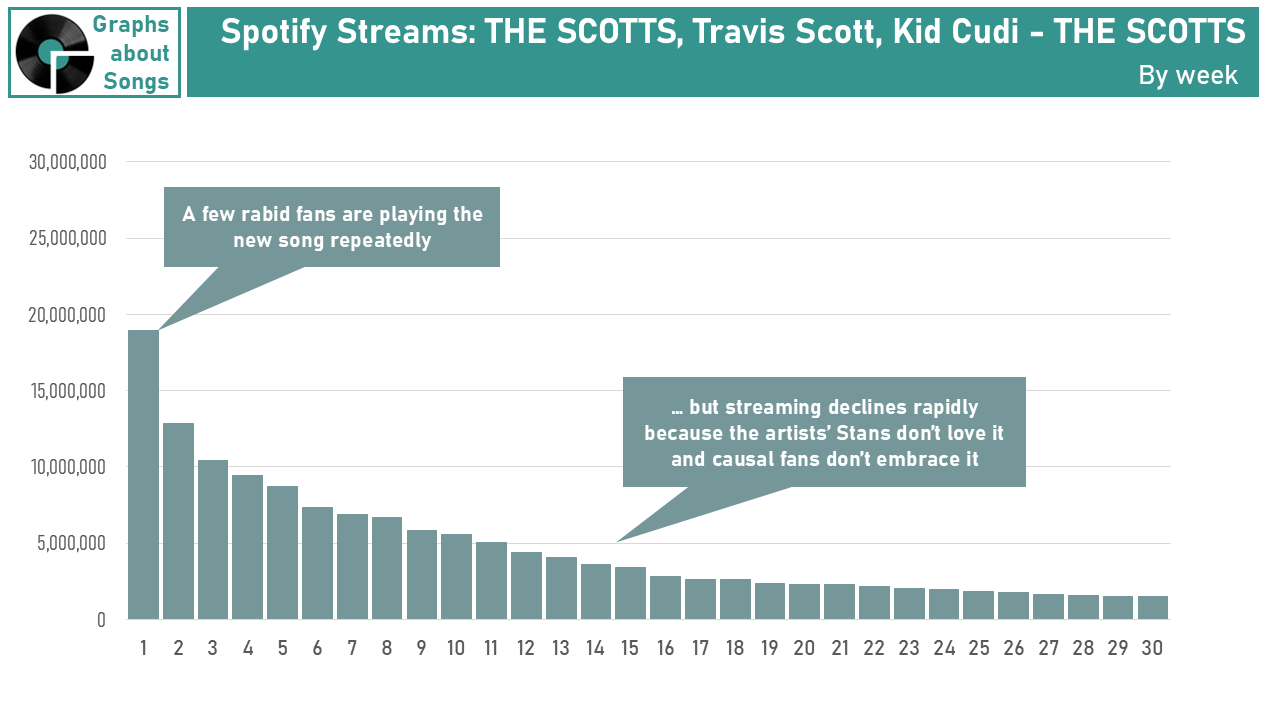
“THE SCOTTS” was indeed the most heavily consumed song in the U.S. in early May of 2020. However, it was not—and never became—the most “popular” song in the U.S.
Billboard has always intended its charts to be tools for industry professionals to gauge music consumption. The fact is, the Hot 100 now does that job far better than it did in the past. It’s using census level data from every streaming service to track every single time someone plays a song.
Even when we tracked every iTunes download, the chart had no idea how often you played that song after you bought it.
Even when we tracked CD sales electronically via SoundScan, we had no idea what you did with that CD once you left Circuit City.
During the heyday of Casey counting them down, the Hot 100 relied on a sample of self-reported rank lists from record stores and radio stations about what they were selling and playing the most. (No room for chart tampering there, right?)
Streaming “Slop”
That brings us back to Drake.
He has the dubious distinction of crafting more songs that his fan base will binge, but that never become “real” hits, than any other artist this decade.
The Switched on Pop podcast dubbed the 2020’s Drake’s “slop era.” Will fans simply listen to anything their favorite artist puts out?
For worse or for better, savvy artists including Taylor Swift, Morgan Wallen, and Drake have figured out that maximizing new release binging from fans is a lucrative business model. When you’re paid per stream, quantify beats quality.
Based on streaming of his latest track, “Janice STFU,” Kendrick Lamar didn’t kill Drake’s career. If anything does, it will be eroding the anticipation of his fans who are expecting another “God’s Plan” and instead get “What’s Next.”
* For the record…
Those eight #1 hits for Drake in the 2020s are:
“Toosie Slide” (2020)
“What’s Next” (2021)
“Way 2 Sexy” featuring Future and Young Thug (2021 )
“Wait for U” Future featuring Drake and Tems (2022)
“Jimmy Cooks” featuring 21 Savage (2022)
“Slime You Out” featuring SZA (2023)
“First Person Shooter” featuring J. Cole (2023)
“Janice STFU”(2026)
Want to know which hits are really hits?
If you’re a fellow chart nerd: Choose the “FREE” option to get Graphs About Songs’ directly in your inbox.
If you program a CHR station: “The Hit Momentum Newsletter” analyzes the Spotify 200 to find the songs that could be huge hits on your station. It’s yours every Monday for a $22 a month subscription below.
Data sources for this article:
The Billboard Hot 100: https://www.billboard.com/charts/hot-100
Wikipedia’s Billboard Hot 100 Top 10 singles: https://en.wikipedia.org/wiki/List_of_Billboard_Hot_100_top-ten_singles
Spotify Charts (weeks of 1/3/2019 through 6/4/2026 for the USA): https://charts.spotify.com/charts/overview/us

This was probably the BEST column yet from you. It will probably ruffle feathers and hurt the feelings of some fans of certain artists, but so be it. Maybe Billboard and the industry are reading ??
Great read. Might have missed it but billboard does cap the number of streams from a single listener in a given week, although there are likely ways around that