


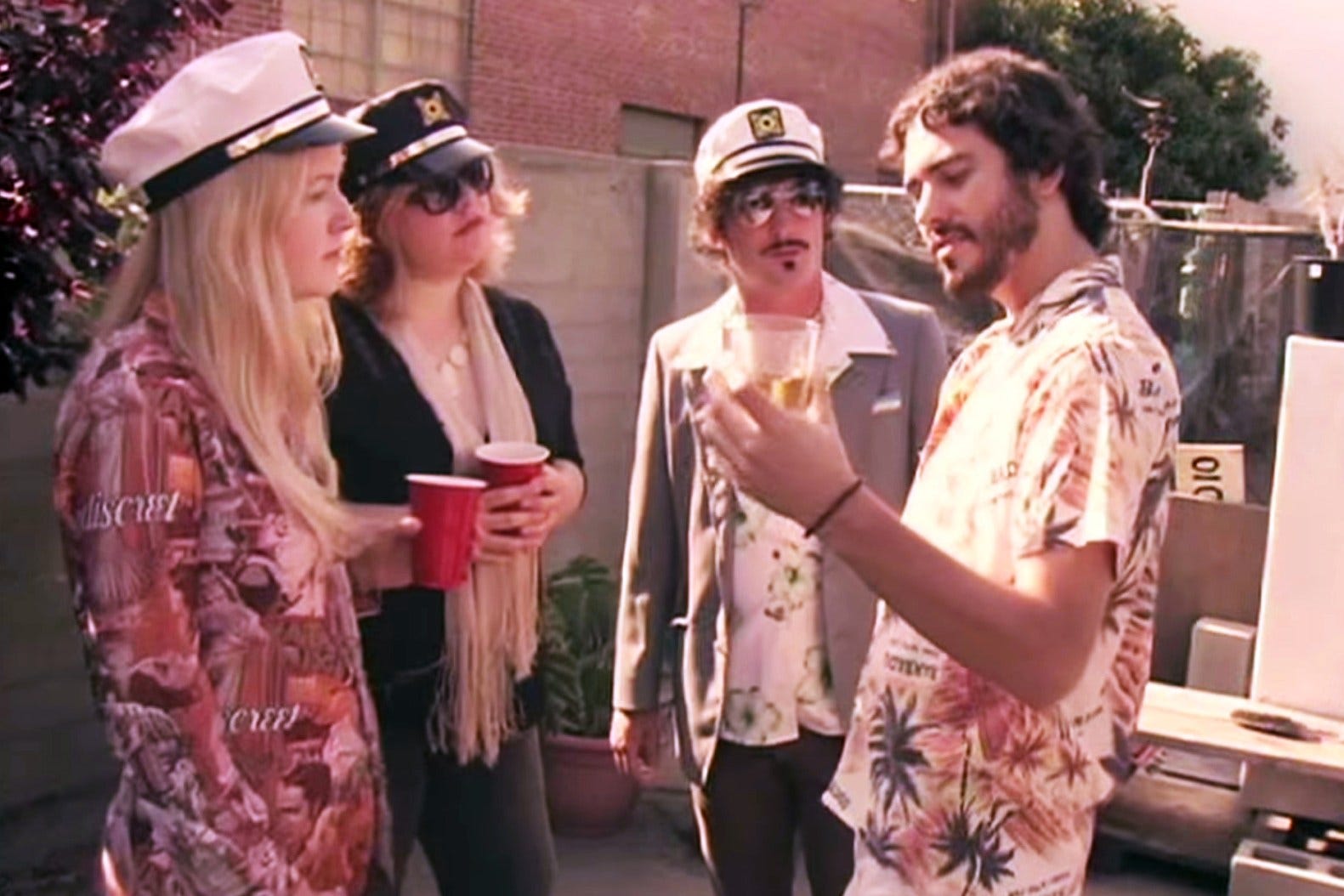
“From 1976 to 1984, the radio airwaves were dominated by really smooth music, also known as Yacht Rock.”
With those words, music critic “Hollywood” Steve Huey accidentally—and retroactively—created a genre.
Yacht Rock started in 2005 as a mockumentary from J.D. Ryznar, Hunter Stair, Lane Farnham, and David Lyons, with commentary from AllMusic’s Hollywood Steve. It chronicles the ludicrously (mostly) fictional backstories of Michael McDonald, Kenny Loggins, Christipher Cross, Toto, and their brethren artists’ quest for smooth music.
The plotlines were perverse, but their appreciation for smooth music was genuine.
A subgenre hiding in plain sight
In the early 2000s, Ryznar regularly invited friends over to grill out and listen to old records. After a Steely Dan bender, Ryznar was obsessed with west coast influenced studio-driven soft rock popular during the Carter Administration. As Ryznar told Rolling Stone:
You know, like Michael McDonald is singing background vocals and like there’s guys on boats on the covers; it feels like you’re on a yacht listening to it. And the guys were like, oh, we know this music.
A quarter century ago, that smooth soft rock from the late 70s was woefully uncool—and they knew it. Huey explains to Rolling Stone:
I turned 30 right before we started doing the series, and I thought, […] What do 30-year-olds do? I feel like it’s time I get into Steely Dan. […] This is my new identity. I’m gonna unwind, start listening to Steely Dan, and leave parties early.
Originally, they submitted Yacht Rock to Channel 101, a non-profit short film festival where a live audience in Los Angles votes to renew or cancel your “TV” show. They did 10 episodes, a good run for the contest.
That would have been the end of it had it not been for something else that came along in 2005… YouTube.
Yacht Rock becomes a thing
As YouTube grew, new fans discovered those original 10 Yacht Rock episodes there. The fame of the genre they found hiding in plain sight entered its own orbit.
In 2007, members of an Atlanta indie band formed the Yacht Rock Revue to perform covers of the songs on the show.
In 2015, SiriusXM launched their Yacht Rock Radio channel.
In 2024, Yacht Rock: A Dockumentary debuted on HBO MAX, chronicles the rise of the smooth sound.
Some artists, such as Michael McDonald, credit the Yacht Rock trend for reviving their careers. Others, such as Steely Dan’s Donald Fagan, reject it in the most Donald Fagan manner imaginable.
In 2016—a decade after the original Yacht Rock mockumentary series—its creators regrouped to host the Beyond Yacht Rock 2000 podcast, discussing both Yacht Rock and other retroactively concocted subgenres, including Regressive Rock, Divorcecore, Camero Summer, and Hobbit Metal.
The Genre Everyone Thinks They Know
While many have now heard of Yacht Rock, few truly understand it.
Yacht Rock is not merely any soft rock from the late 70s and early 80s. It’s a specific subgenre of smooth music, created by a tight-knit group of formally trained west coast studio musicians obsessed with musical perfection. It’s sophisticated, but it’s still Pop music. It’s smooth, but it grooves.
It’s not the acoustic folk of James Taylor, Gordon Lightfoot, or Cat Stevens.
It’s not the Quiet Storm balladry of Phillys Hyman, Teddy Pendergrass or Anita Baker.
It’s not the British Sophisti-pop of Joe Jackson, The Style Council or Roxy Music.
It’s not Pop-Jazz of Chuck Mangione or Herb Albert
It’s also not about boats.
Myriad “Yacht Rock” playlists include Brandy” by Looking Glass, “Escape (The Pina Colada Song)” from Rupert Holmes, and Bertie Higgons’ “Key Largo,” only because they’re songs with nautical or beach themes. It’s music you would play on your yacht, not music about your yacht. (They later created Marina Rock to distinguish it.)
And it absolutely, positively is NOT Jimmy Buffet.
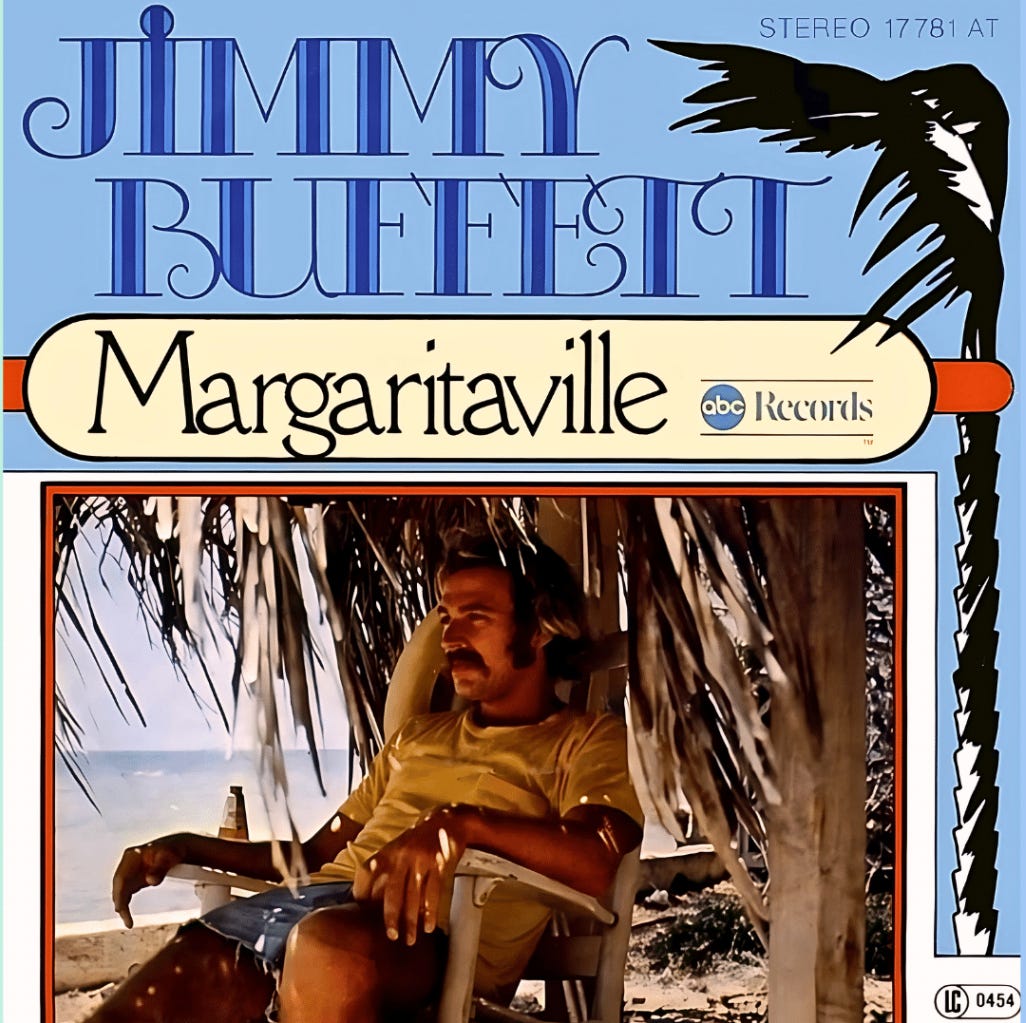
“Yacht” conjures highbrow sophistication, not Destin, Florida.
Having grown tired of hearing their retronym soiled by these songs, the Yacht Rock inventors created the Yachtski Scale. On their aforementioned podcast, and now on the “Yacht or Nyacht” podcast, they rate songs on a scale of 1 to 100.
Above 50 is “Yacht,” 49 and below is “Nyacht”.
Because anyone worth their Yacht has loved a good spreadsheet since VisiCalc, they’ve conveniently created one for us with every song they’ve rated at: www.yachtornyacht.com.
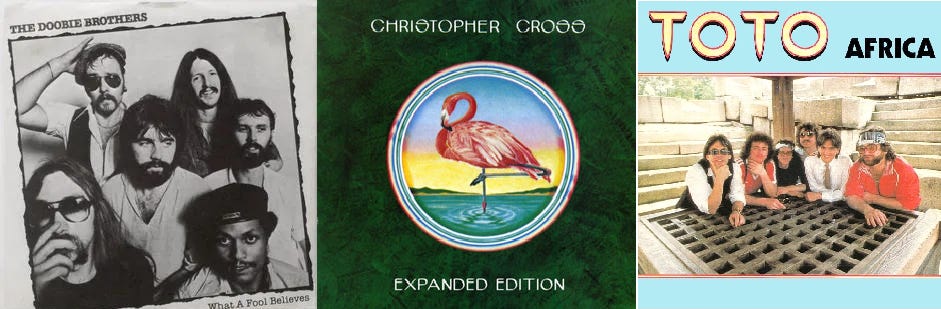
The quintessential Yacht Rock song is “What A Fool Believes” by The Dobbie Brothers, which all four creatures rated a perfect 100. Kenny Loggins’ “This Is It,” (98.25) Christopher Cross’ “Sailing” (94.5) and Toto’s “Africa” (93.0) are also “essential” Yacht Rock.
In contract, “Peaceful Easy Feeling” (1.25) and “Best Of My Love” (1.50) by The Eagles, America’s “Sister Golden Hair,” (5.25) and Jimmy Buffett’s “Margaritaville (2.75) define what is “Nyacht” Rock.
The Yacht Rock creators retroactively outlined these six criteria for determining whether a song belongs in the genre they also retroactively created:
“Was it released from 1976 to 1984? “These years represent the period when the prime purveyors of Yacht Rock were active and popular. By this period, recording technology advancements facilitated the technical precision and sophistication that defined Yacht Rock’s quality reputation.
“Does it musically acknowledge the existence of Black people?” While most Yacht Rock icons are white, their music has R&B and Jazz influences. Michael McDonald’s music incorporates St. Louis soul. Country Rock such as the Eagles lacks this element. “It’s a groove, not a Hippie campfire singalong.”
“Is this song more complex than your typical Pop song?” Listening to The Doobie Brothers’ “What A Fool Believes” is effortless, but playing it is notoriously difficult. Real Yacht Rock exhibits musical sophistication that the typical disco hit of the era lacks.
Did specific L.A. studio musicians play on the song? That short list includes Jeff Porcaro, the drummer who worked with Steely Dan and dozens of Jazz and Rock legends before forming Toto along with his brother Steve and guitarist Steve Lukather, as well as “Skunk” Baxter, guitarist for Steely Dan and The Doobie Brothers. Others include drummer Steve Gadd and Guitarist Jay Graydon, vocalists Bill Champlin and Patti Austin, and producers David Foster and Quincy Jones. (And if there’s a saxophonist, it damn well better be David Sanborn). If you were smooth enough for Steely Dan, you probably helped create Yacht Rock.
“Are the lyrics of this song a little jaded?” This upbeat music often belies stories of lovesick fools on the verge of relationship meltdown.
“Is It Pop Music?” The era’s Jazz fusion that would later become New Age (and devolve into Smooth Jazz) is soulful and sophisticated, but Pat Metheny, Chick Corea, and Herbie Hancock weren’t making three-minute ditties you could sing in the shower. Neither were balladeers of The Quiet Storm such as Teddy Pendergrass or Phyllis Hyman. Yacht Rock is meant to be mass appeal.
These six criteria clarify why songs like Seals and Crofts’ “Summer Breeze” and “Diamond Girl, from the early 70s, “She’s Gone” and “Sara Smile” from Philadelphia Soul inspired Hall & Oates, and Scotsman Gerry Raffarty’s “Baker Street,” are not, in fact, Yacht Rock, despite their omnipresence on Yacht Rock playlists.
Now that we’ve clarified what Yacht Rock is and is not, let’s get into what we’re here to do to music: reduce it to PowerPoint charts.
Quantifying Yacht Rock
At last count, The Yacht Rock certified Playlist J.D. Ryznar curates on Spotify has 885 songs that officially make the boat. You’ve probably never heard most of them. (But if you do know Airplay’s “Nothin’ You Can Do About It” or Maxus; “Nobody’s Business,” you have my respect.)

I’ve cross-referenced all the songs with Yacktski scores from 50 to 100 with the Billboard Hot 100 chart, as well as the Adult Contemporary and Album Airplay charts, to determine how many real Yacht Rock songs are also real hits.
#1: There are only about 77 real Yacht Rock hits
Professionally, Steve Reynolds is a talent coach for morning radio personalities. On Facebook, however, he’s known for his barbed accusations against Sirius/XM’s Yacht Rock Radio for playing songs that either aren’t Yacht Rock or aren’t familiar hits.
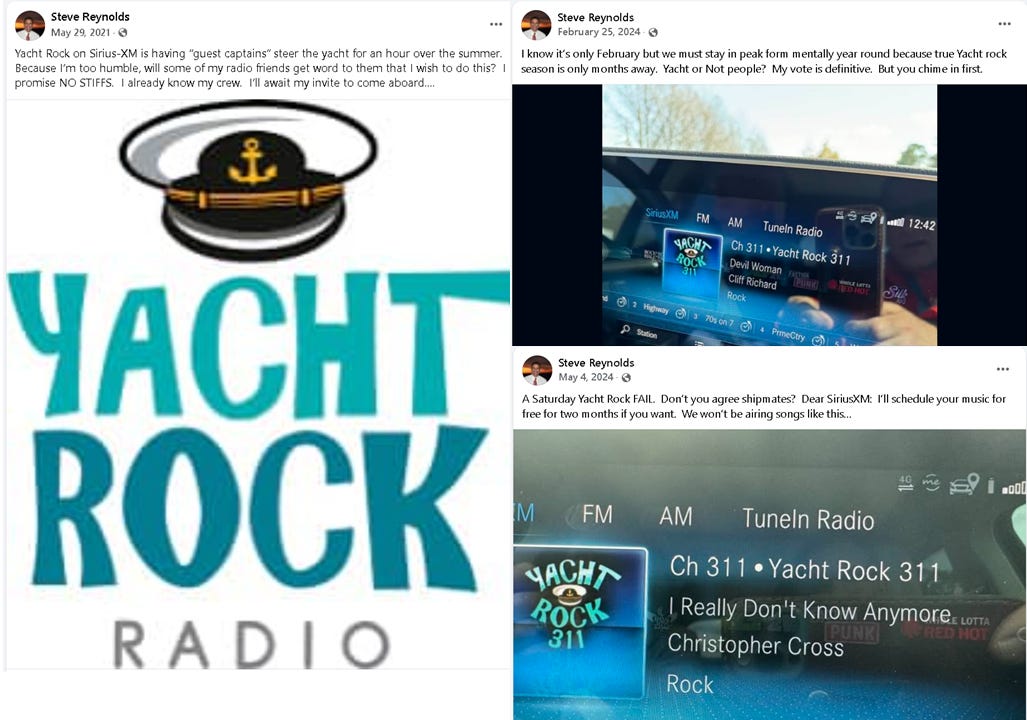
Many prominent radio programmers are sailing with Steve on his journey.
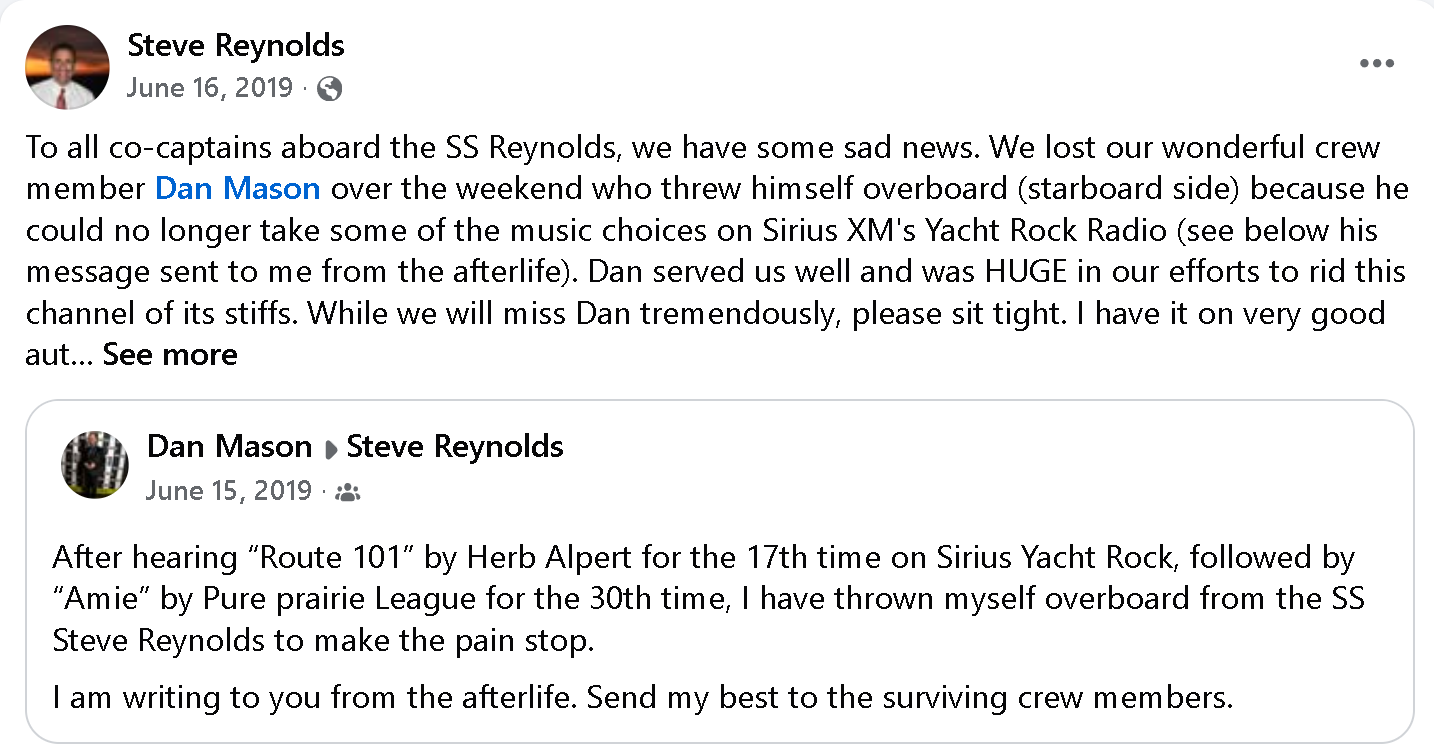
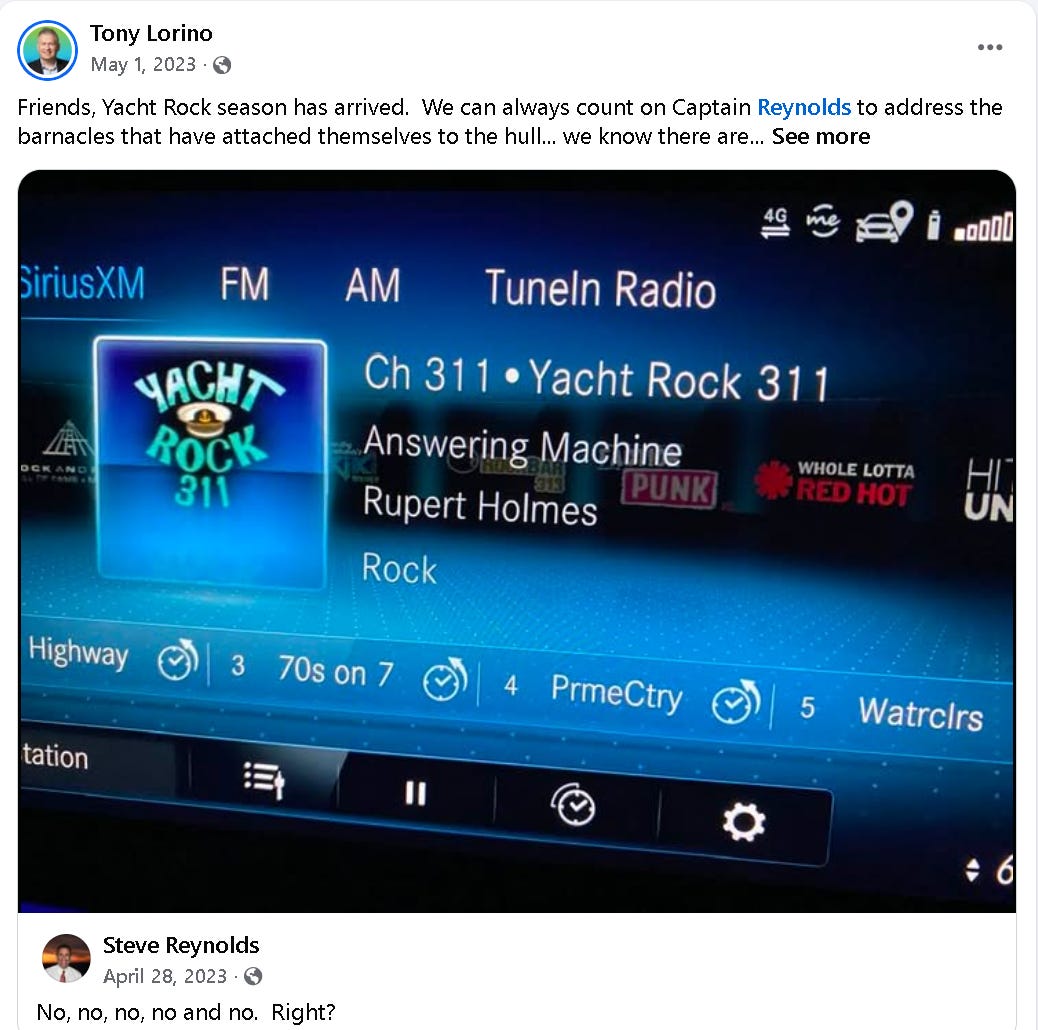
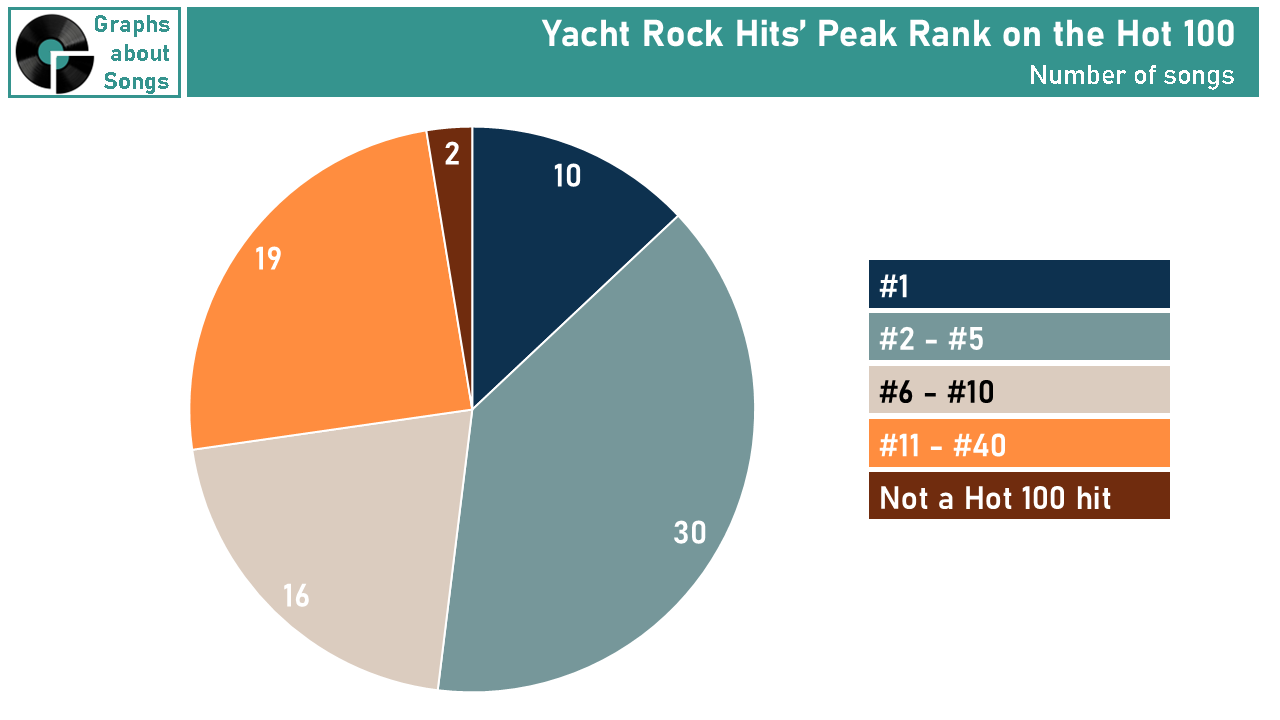
Here’s the challenge: There are only 77 Yacht Rock songs that were hits.
56 were Top 10 hits on the Billboard Hot 100
19 were Top 40 hits that peaked at #11 or below but were bigger hits on Adult Contemporary or Album Rock stations.
2 weren’t released as singles and, therefore, were never on the Hot 100, but were album tracks that album rock radio plays a lot.
You likely heard those songs that weren’t Top 10 hits on your mom’s Soft Rock station or your dad’s Album Rock station.
Casey Kassem officially counted down 75 Yacht Rock hits.
77 songs simply aren’t enough to sustain a radio station around the clock. It’s barely seven hours of music. Even the most annoyingly repetitive Classic Hits station has around 250-300 songs on its playlist.
That’s why attempts to make Yacht Rock a traditional radio format either add compatible Nyacht songs from the era or dive into the deep tracks nobody knows.
#2: Yacht Rock hits were huge mass-appeal hits
Just because there aren’t a lot of real Yacht Rock hits doesn’t mean those hits weren’t popular.
Many were massive.
10 of the songs scoring 50-100 on the Yachtski scale were #1 hits, including The Doobie Brothers’ What A Fool Believes,” Christopher Cross’ “Sailing,” and Toto’s “Africa.”
Another 9 songs only reached #2, but spent 10 or more weeks in the Top 10 (a long run in Billboard’s pre SoundScan era), including Toto’s “Rosanna,” “Baby Come Back” from Player, and “Just the Two of Us” from Grover Washington Jr. & Bill Withers.
A lot of fans remember these songs because of the many years they were mainstays on “the station the whole office can agree on.” While Yacht Rock today is a subgenre of “Soft Rock,” most Yacht Rock classics were bona-fide Top 40 Pop hits when they were current.
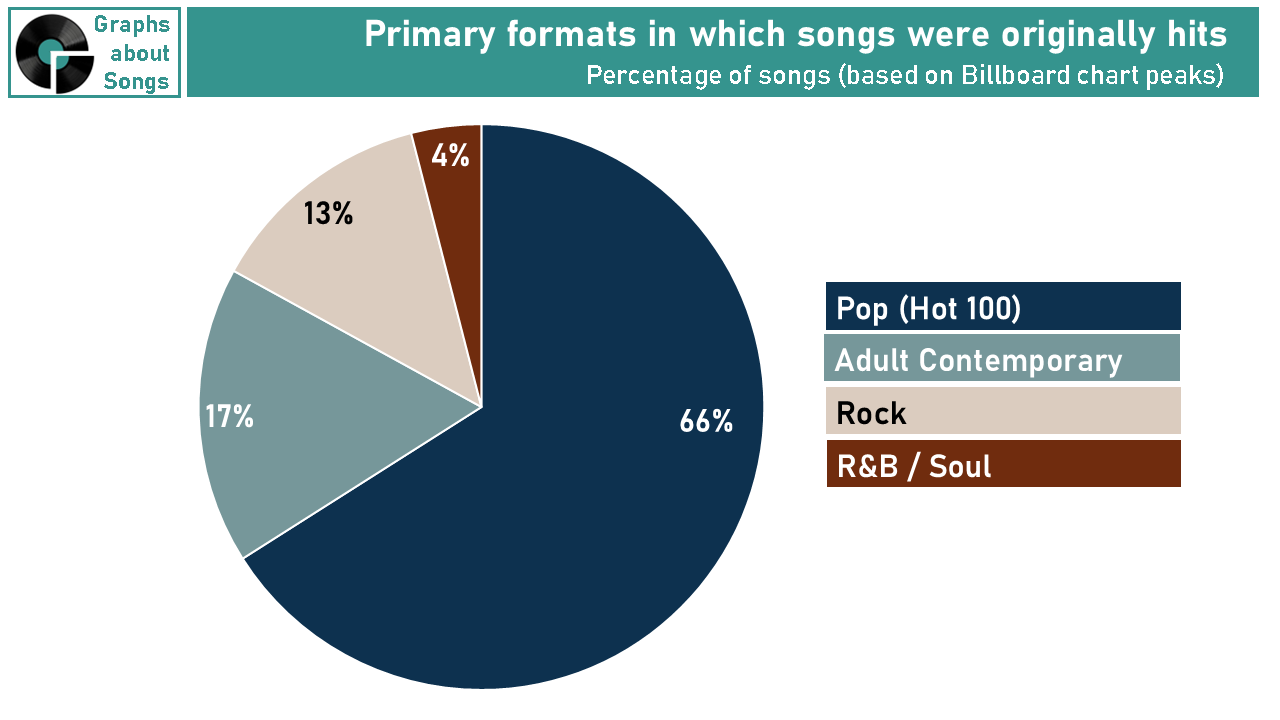
Only about 17% of the Yacht Rock hits were predominantly hits on Adult Contemporary radio when new
Almost as many (13%) were big hits on Album Oriented Rock.
As soulful as many Yacht Rock hits are, only 4% were predominantly R&B hits.
#3: 1980 was peak Yacht Rock
The graph below shows the percentage of Top 10 hits in a typical week each year were bona-fide Yacht.
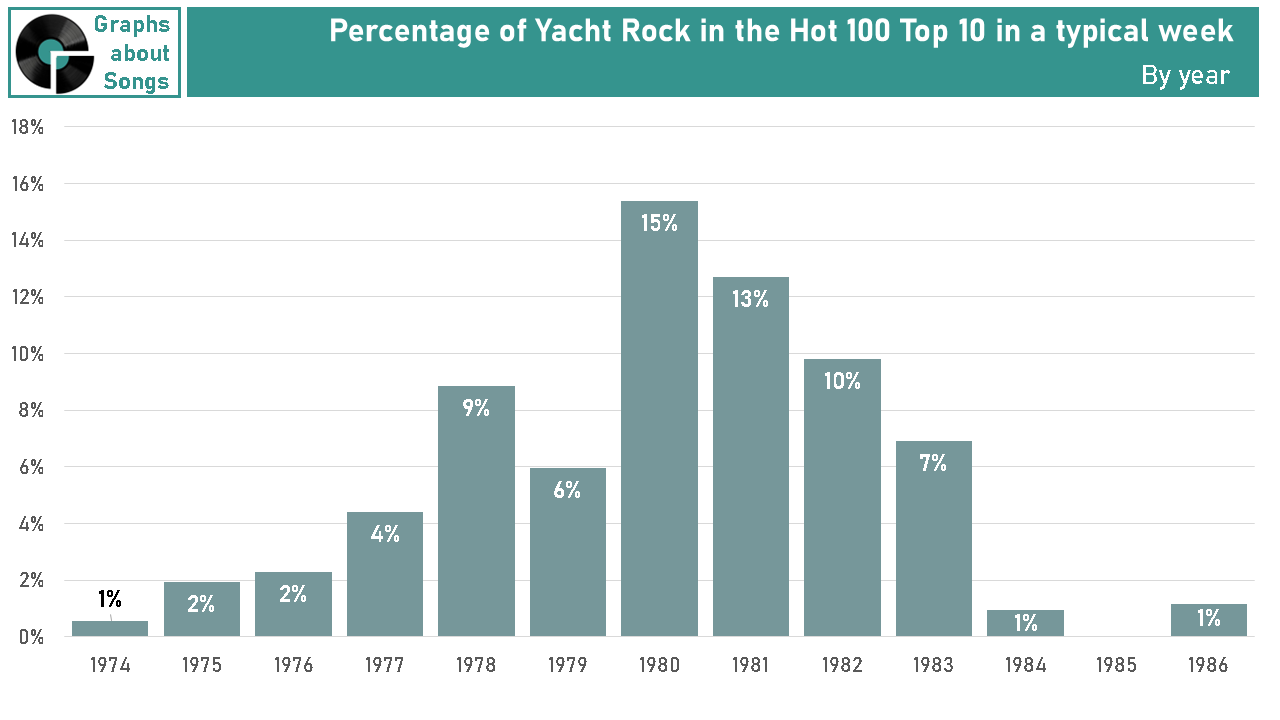
Peak Yacht was 1980, when 15% of the biggest songs were on the boat. You couldn’t leave your house in 1980 without hearing “”Ride Like the Wind” from Christopher Cross, or his aforementioned “Sailing, Ambrosia’s “Biggest Part of Me”“ Steal Away” from Robbie Dupree (flagrantly ripping off that Doobie Bounce from “What A Fool Believes), or George Benson’s “Give Me the Night”
14 different Yacht Rock classics reached the Hot 100 in 1980, more than any other year.
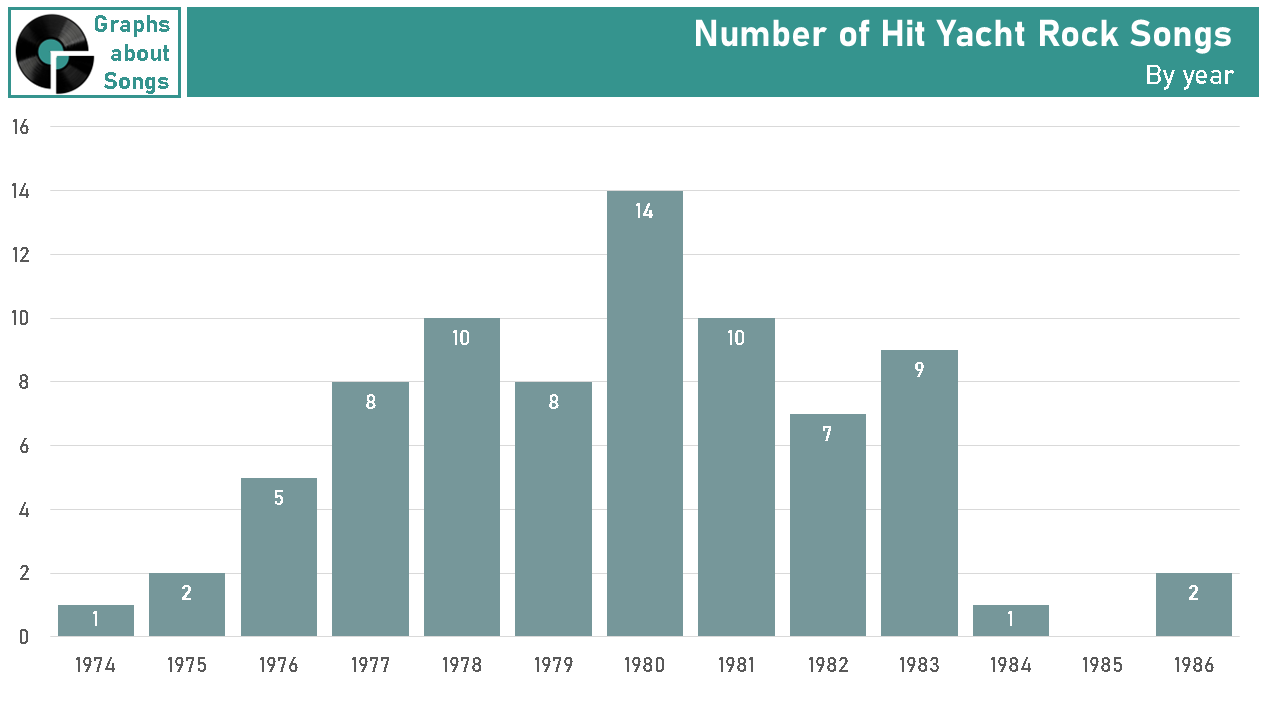
In the two graphs above, you can clearly see how Smooth music sank after 1983 once MTV-era New Wave took over the charts.
#4: There are only 20 “Essential” Yacht Rock Hits
Technically, there are 23, since I included three Steely Dan album cuts that Rock stations played heavily at the time.
Ignoring “Black Cow,” “Deacon Blues,” and “Kid Charlemagne” (which I would never advise you to do in your own life), there are only 20 songs the Yacht Rock creators deem “essential,” with a 90+ Yachtski score. However, most of those 20 songs were massively popular:
12 were Top 10 Pop hits: Four of them were #1s, including “What a Fool Believes”, “Sailing”, “Africa” and Patti Austin and James Ingram’s “Baby, Come to Me” Other Top 10s include Toto’s “Rosanna” (#2), “Love Will Find a Way” from Pablo Cruise #6), and “I Keep Forgettin’ (Every Time You’re Near)” from Michael McDonald (4)
7 were Adult Contemporary hits: Kenny Loggins’ “Heart to Heart,” Christopher Cross’ “Never Be The Same”, and “Mornin’” from Al Jarreau didn’t make the Hop 100’s Top 10, but they’re among the songs that were Top 3 hits on Billboard’s Adult Contemporary chart. (By the way… if you spent your childhood horrified at Jarreau’s biracial slur he’s singing, “sister Oriole.” I am relieved to know he merely thinks he’s related to a bird.)
1 was a Rock hit: “Peg” from Steely Dan’s Aja album peaked at #11 on the Hot 100 but was huge on album-oriented Rock radio.
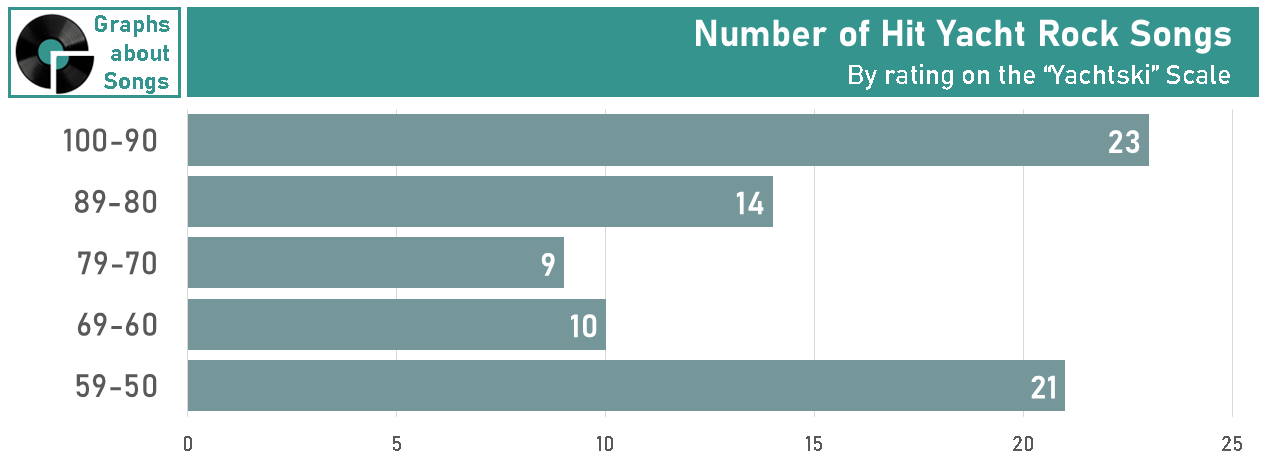
Meanwhile at the stern are those Yacht Rock songs that barely made it on board. There are almost as many bona-fide hits that are barely Yacht Rock, with a Yachtski Score between 50 and 60, than there are songs that are “essential Yacht Rock”
Some of those songs that even the Yacht Rock arbiters aren’t sure should be on board include:
“Proto Yacht Rock: “How Long” by Ace (1975) and Steely Dan’s “Rikki Don’t Lose That Number” (1974) predate Yacht Rock, but point towards its ascendance.
Not from the scene: They have parts of the sound, but lack connections to the west coast musicians at its core, including Canadian Gino Vannelli’s “I Just Wanna Stop” and “”Living Inside Myself”, as well as “Reminiscing” from Australia’s Little River Band.
Doesn’t have the sound: On the other hand, these artists are connected to the scene, but the songs barely have the sound, such as “Hold The Line” from Toto and Bill Withers’ “Lovely Day.”
#5: There’s no correlation between a song’s Yachtiness” and its Chart Performance
The chart below plots the 56 songs that were both above 50 on the Yachski Scale and Top 10 hits on the Billboard Hot 100.
How far a song is from left to right reflects its Yacht score (right=Yacht)
How far a song is from bottom to top reflects its weeks in the Top 10 (Top=Longer)
For context,
Toto’s Rosanna is on the far upper right because its the combination of the most Yachty and the most weeks in the Top 10. (Very Yacht + Big Hit)
Meanwhile, the Captain & Tennille’s “You’ve Never Done It Like That Before” is the lowest combination of Yachtiness and the fewest weeks in the Top 10. (Barely Yacht + Lesser Hit)
Does a song’s relative Yachtiness impact its performance as a Pop hit?
Nope.
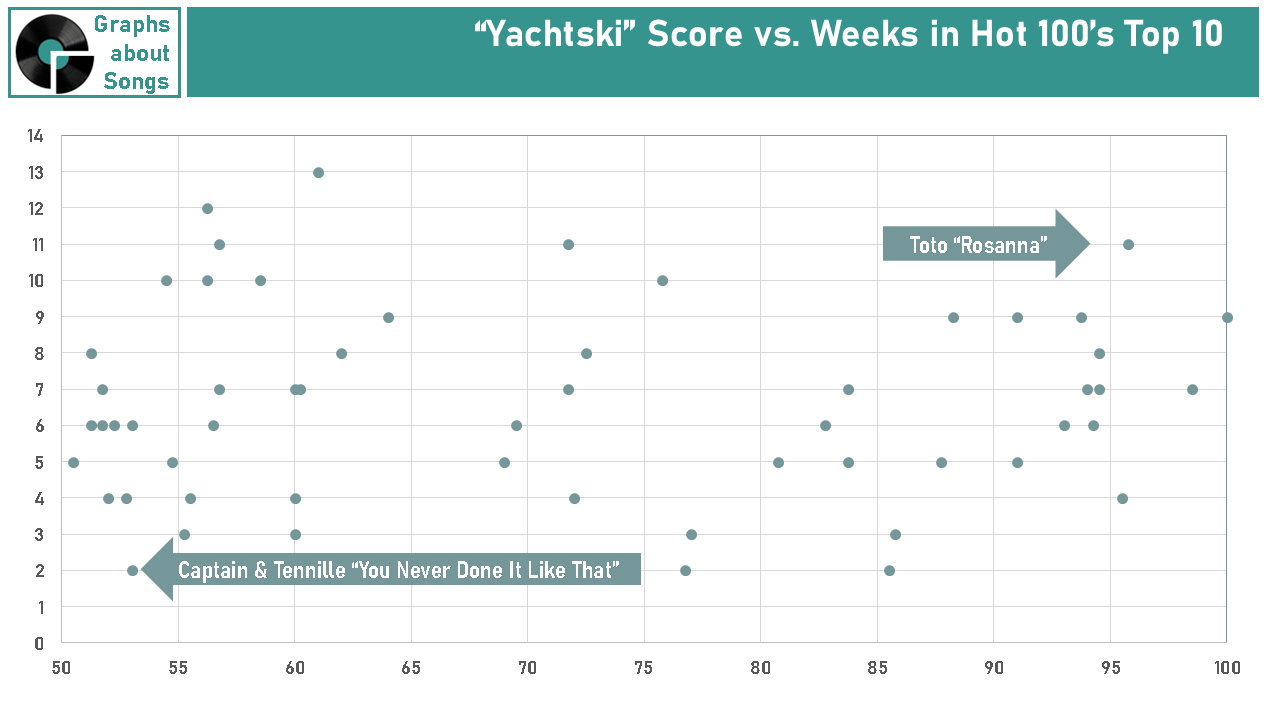
If it did, those dots above would cluster around a line showing a corollary trend. The correlation factor between these two metrics is “0.03,” indicating a high Yacht Score neither helps nor hurts a song’s longevity on the charts.
Today’s article is brought to you by my day job, providing custom analysis of local music streaming that’s more accurate, less delayed, and way cheaper than old-school callout:

Why is Yacht Rock suddenly so popular?
Every generation reaches a point in life where it collectively gains newfound appreciation for its parents.
Two decades ago, many Boomers, who wouldn’t have been caught dead listening to their parents’ music in the sixties, suddenly discovered the Great American Songbook. (I discovered my own dad, who at last check had been into John Lee Hooker, playing Peggy Lee.)
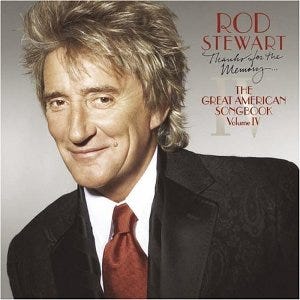
They were the ones buying all those Rod Stewart Standards’ albums.
Generation X has reached that age.
Suddenly, those memories of hearing The Doobie Brothers, Kenny Loggins, and Christopher Cross as little kids in the back seat when Mom switched the radio to her station are a lot more precious than they seemed at the time.
Of course, when Gen Xers get nostalgic, we’re obligated to do it ironically
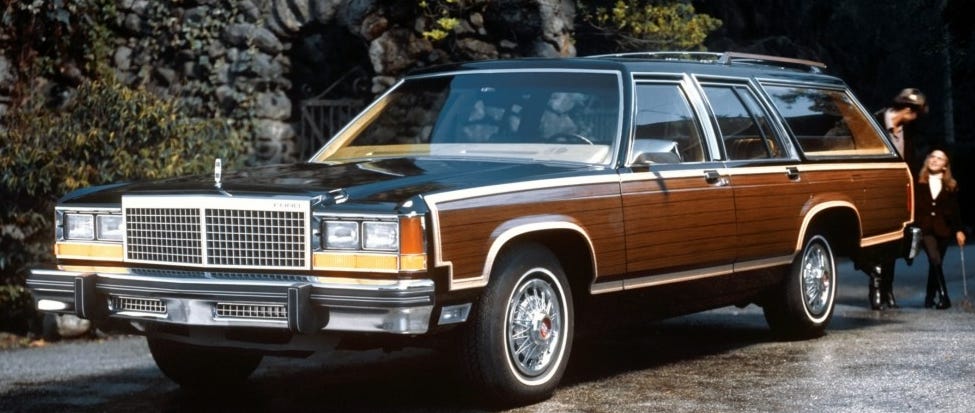
The Boomers originally made those smooth soft rock songs popular in the late 70s and early 80s. They’re now well into their 70s. t’s their kids, who heard this music as grade-schoolers and are now in their 50s, who are largely fueling the Yacht Rock resurgence.
Plus, one very cool pre-teen in Iowa…
Want your favorite music turned into graphs?
For my fellow chart nerds and music geeks: Choose the “FREE” option to get Graphs About Songs’ stuff like today’s article directly in your inbox.
For Radio Programmers: “The Hit Momentum Newsletter” is my weekly analysis of the Spotify 200 that finds the songs that could be huge hits on your CHR or HOIT AC station. It’s yours every Monday for a paid subscription below.
Data sources for today’s article:
Yacht or Nyacht? https://www.yachtornyacht.com/
The Billboard Hot 100: https://www.billboard.com/charts/hot-100
The Billboard Adult Contemporary (Easy Listening) chart: https://www.billboard.com/charts/adult-contemporary/
The Billboard Hot Soul Singles (now the R&B/Hip Hop Songs) chart:
Radio & Records Album Airplay chart: https://www.worldradiohistory.com/Archive-All-Music/Radio_and_Records.htm
Wikipedia’s Billboard Hot 100 Top 10 singles: https://en.wikipedia.org/wiki/List_of_Billboard_Hot_100_top-ten_singles
Hi Matt, I have long suspected that the Yacht Rock genre was indeed just a playlist and NOT a radio format. We appreciate you connecting all the dots for us as only you can! Thank you!
And to Steve Reynolds, may he continue to fight the good fight against the many stiffs that we hear pop up on Sirius/XM's Yacht Rock channel.
Very interesting. I tend to lose “subscribers” when I fuck up and post a piece with a song link that makes you have to leave the platform for five minutes to listen to it. I lost four yesterday over this one, but picked up @Pąșśìóň Pïț as a mutual fan and maybe even an actual friend. I went to LA in the early 80s and recorded a bunch of tunes with a producer (I rejected his shitty contract offer though) but this tune wasn’t written until 1992 and wasn’t recorded until 2013. I guess I missed the yacht rock boat. I probably would have hung up on the dude like Fagen did.
https://biffogram.substack.com/p/devils-cry