


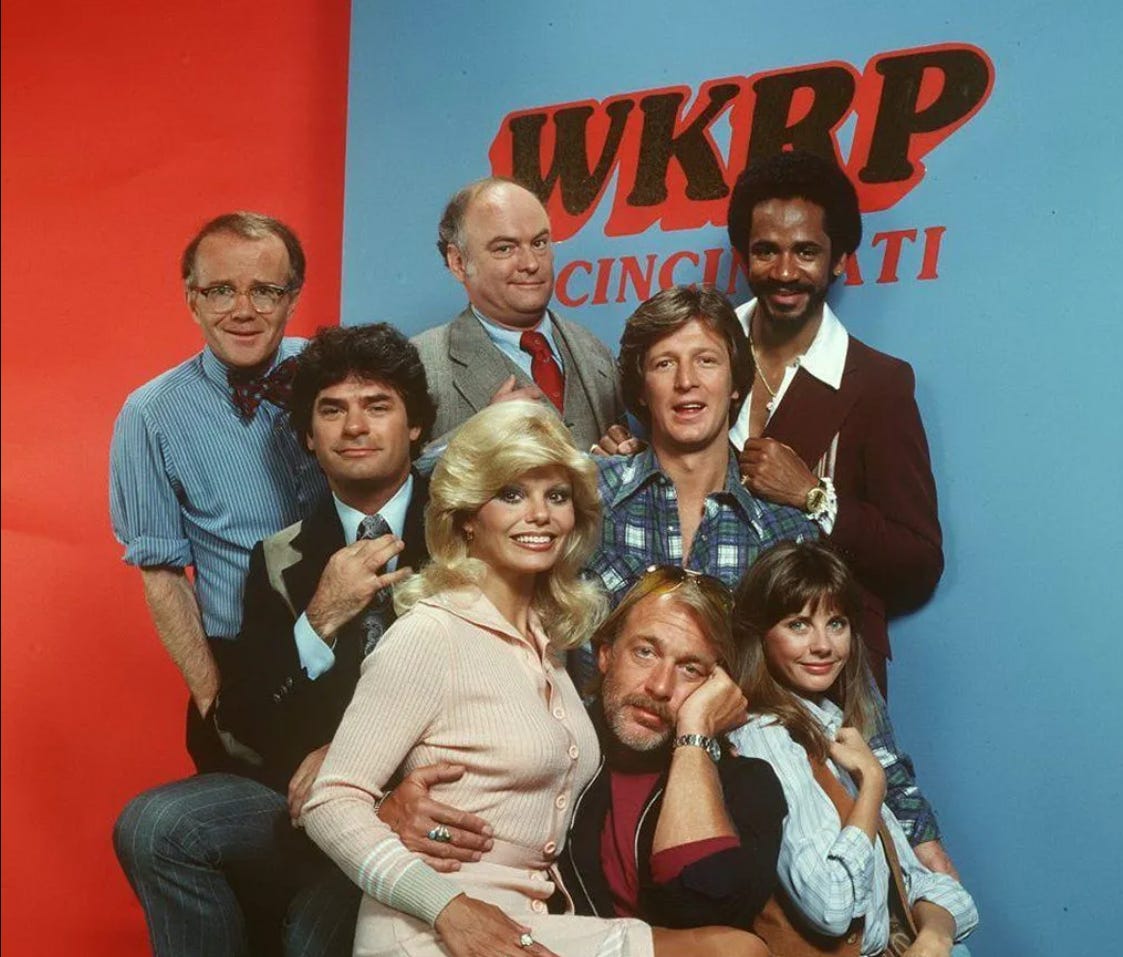
Last month, 97.7 WOXY officially changed its call letters to WKRP-FM. It’s the first time the WKRP call letters are on a real-life radio station in Cincinnati. WKRP-FM plays a variety of classic hits from the 60s, 70s, and 80s, which the station was already playing before buying the WKRP callsign.

We’re not here to discuss that station’s music. (Sean Ross did a great job here already.)
We’re here to analyze the tunes on the “real” WKRP in Cincinnati—the fictional radio station of the TV series on CBS from 1978 to 1982
A key feature of the show was that it featured real songs by real recording artists. The show recorded on video tape instead of film to take advantage of a music licensing loophole that allowed them to play The Beatles on a network TV show affordably.
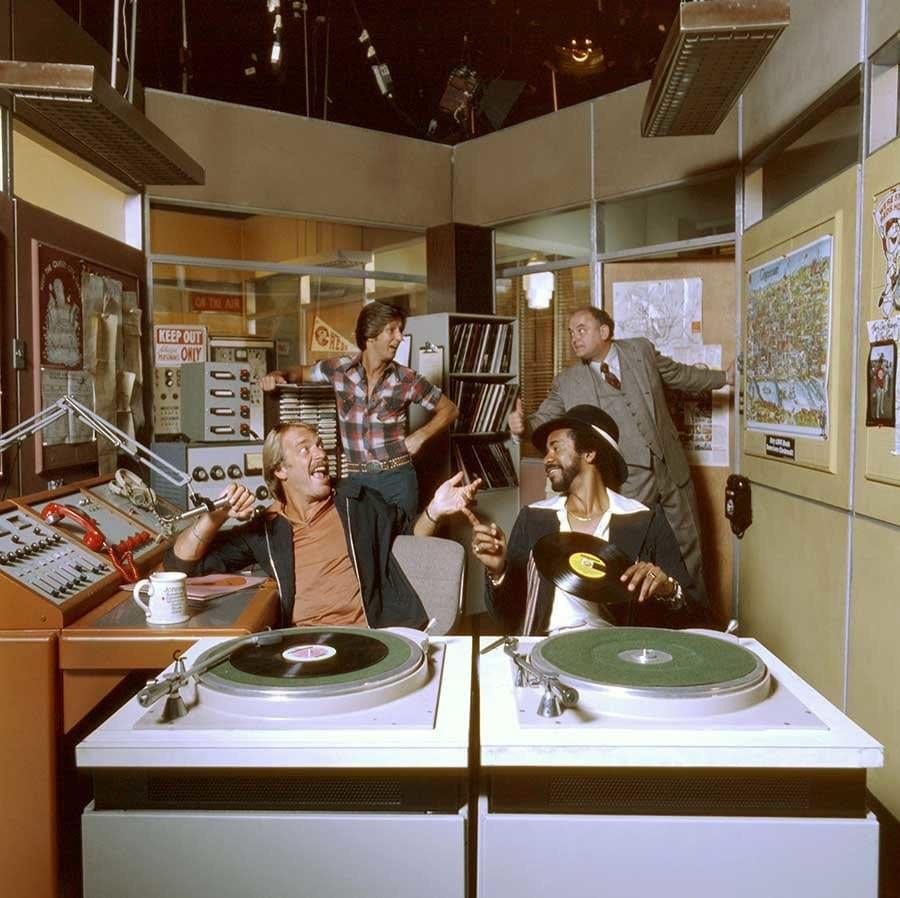
Today, we’re going to analyze the music on WKRP in Cincinnati, not like Norris breeze did, but as my former radio research and consulting colleagues and I would do. We’ll…
Analyze how many contemporary songs verses golden oldies WKRP played.
Examine the various sub-genres WKRP played.
Parse how many proven hits verses obscure titles WKRP featured.
We’ll ultimately decide exactly what format WKRP in Cincinnati aired—and if the station would realistically rise from #16 to #6 in the Cincinnati radio ratings during its run.
Thanks to several superfans of the show, we have detailed information about the 295 songs that ever appeared on WKRP in Cincinnati, including the context of how the show used each song. I’m using the outstandingly detailed listing Mike Hernandez compiled and shared as a Google Sheets document here.
Thanks to Mike’s detailed notes on how the show used each song—as well as my own recollections—I’m excluding songs not actually played in full on WKRP. That means I’m not including:
Songs played in other scenes, such as
Johnny Mathis’ “Chances Are” (played at Les Nessman’s Apartment in “Les’ Groupie”
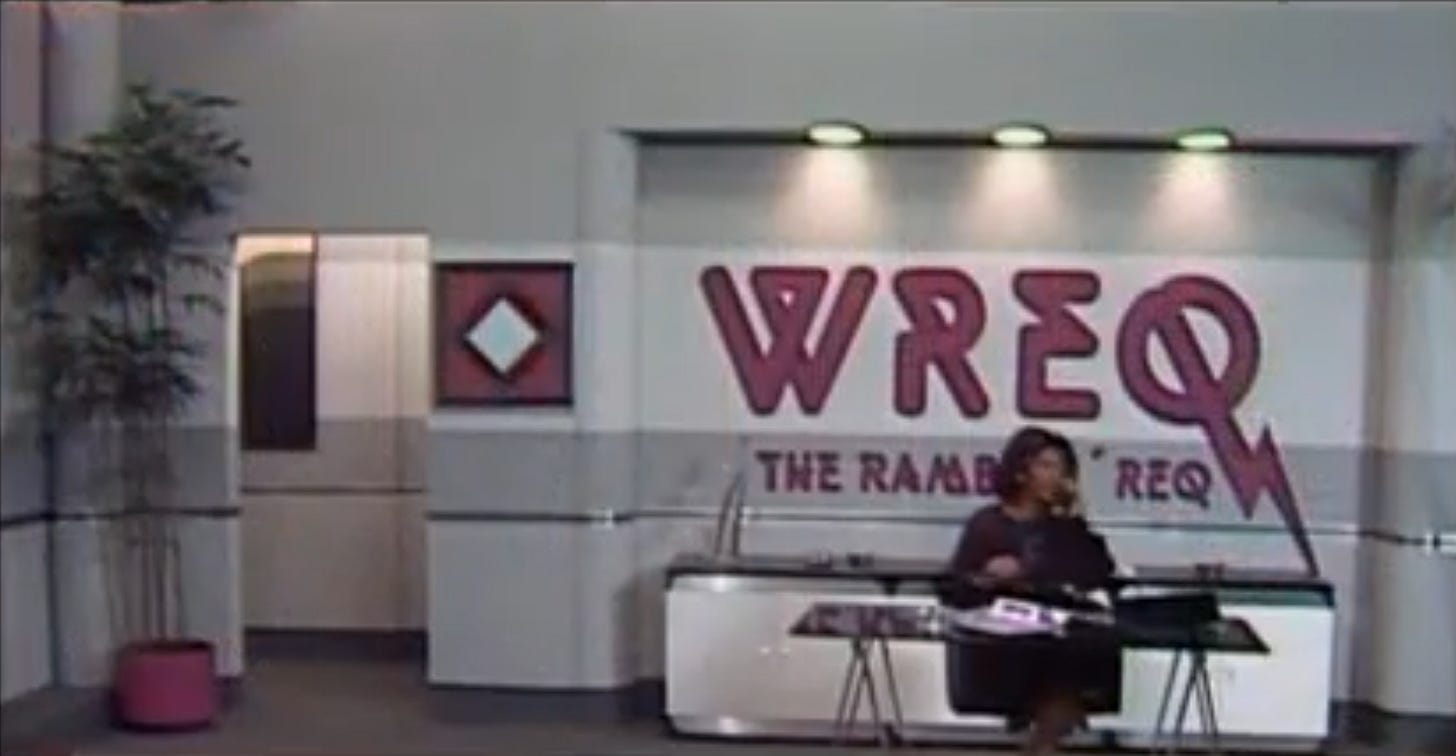
Sly & The Family Stone’s “The Same Thing (Makes You Laugh, Makes You Cry)” playing on WREQ during Venus’ job interview in “Venus Rising.”
Any of the Disco songs played by Johnny Fever’s alter ego Rip Tide on his TV show Gotta Dance.
The six songs whose clips created the montage for “The Contest Nobody Could Win.” (sorry, Wayne Newton and Francis Scott Key)
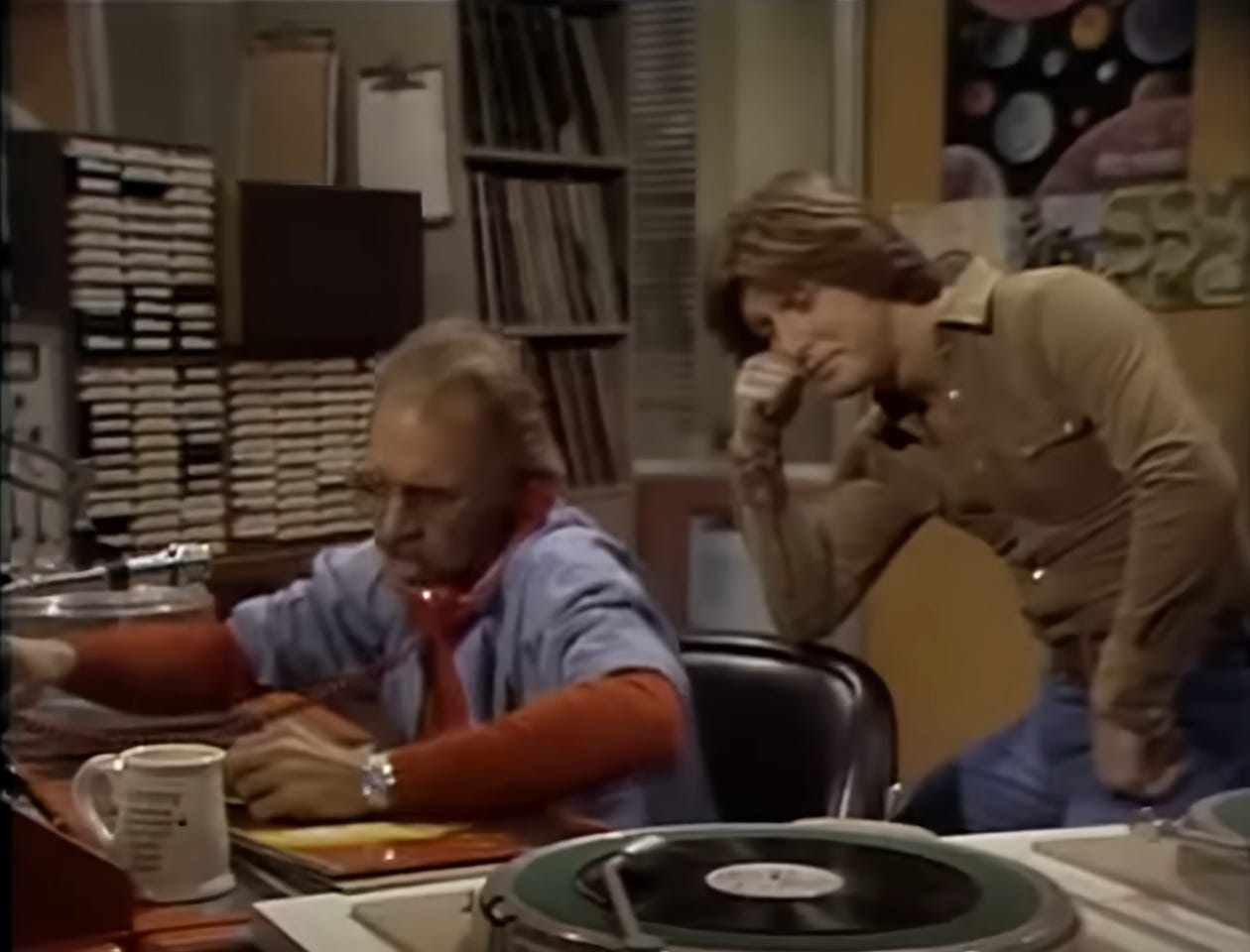


“Wanted” by Perry Como, playing on WKRP in 1954 during the Christmas past flashback scene in “Bah Humbug”.
Any songs sung by characters
Finally, I’m skipping the three Christmas songs WKRP plays, which unfortunately means Jingle Bells by Barking Dogs isn’t included.
With those deletions, we’re left with 202 songs that actually aired on WKRP in Cincinnati. Let’s analyze them.
A Top 40 Station? Nope.
The most common misstatement is that WKRP was a “Top 40” Rock ‘n’ Roll station. It was not. Despite receptionist Jennifer Marlowe answering the phones, “home of the hits, where your advertising dollar goes further,” WKRP was not a hit music station.
First, only six out of ten songs WKRP played were contemporary songs from the current or previous year. The remaining four out of ten songs were gold titles from previous years.
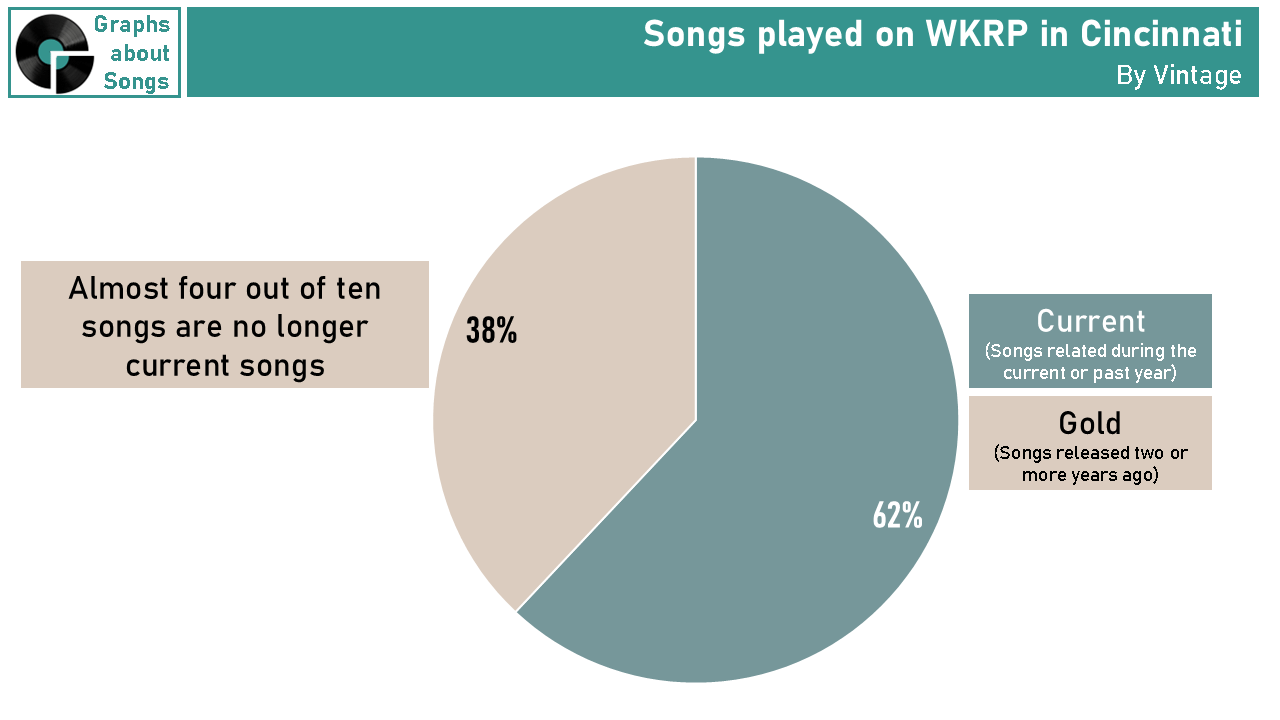
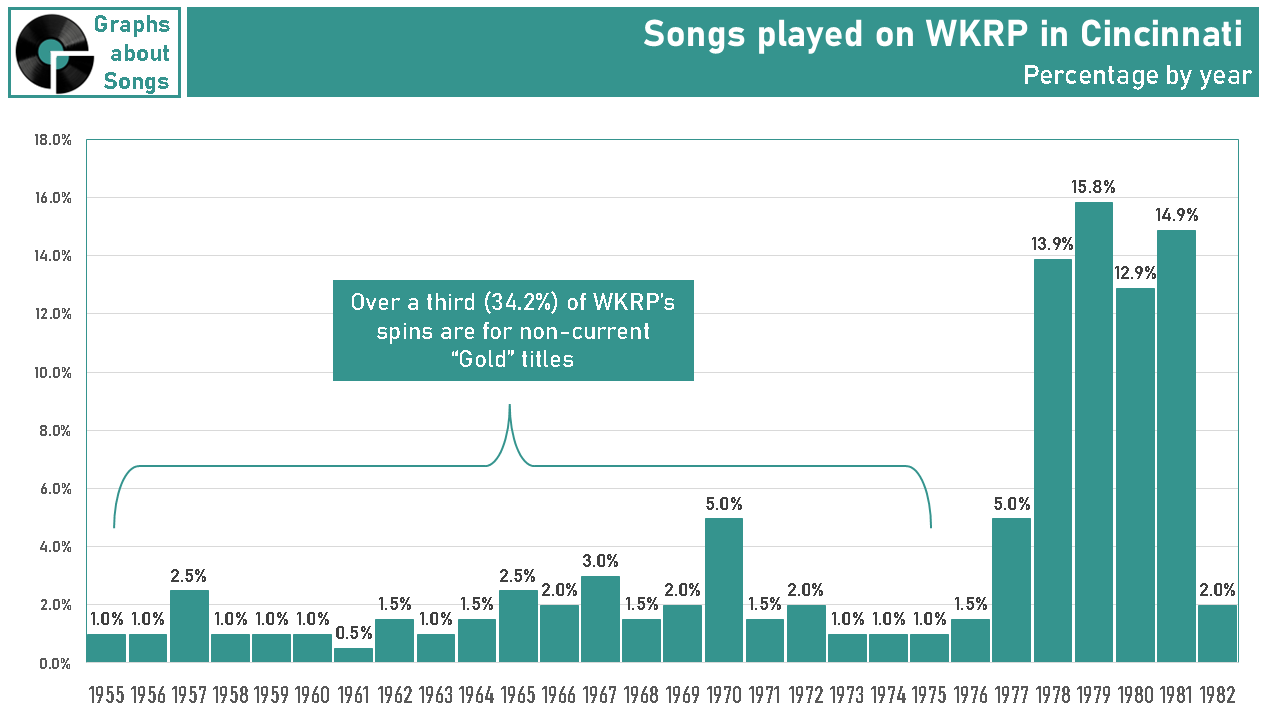
That alone wouldn’t disqualify WKRP—Top 40 stations have always mixed on songs that were hits from a few years ago. What does differ, however, is just how old most of those Gold titles are: WKRP played songs all the way back to the birth of Rock ‘n’ Roll in 1955.
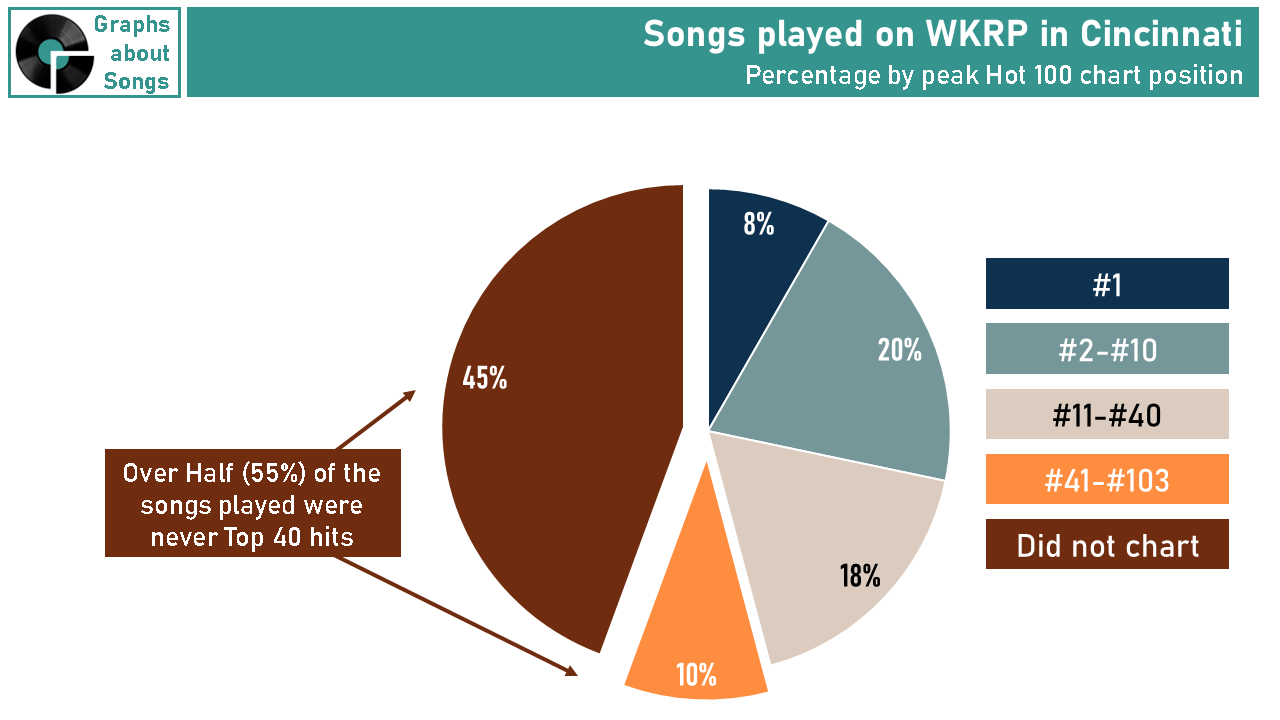
More fundamentally, the majority of songs WKRP in Cincinnati played—both the current songs and the oldies—were never Top 40 hits. Fewer than 30% of the songs WKRP in Cincinnati played were Top 10 hits.
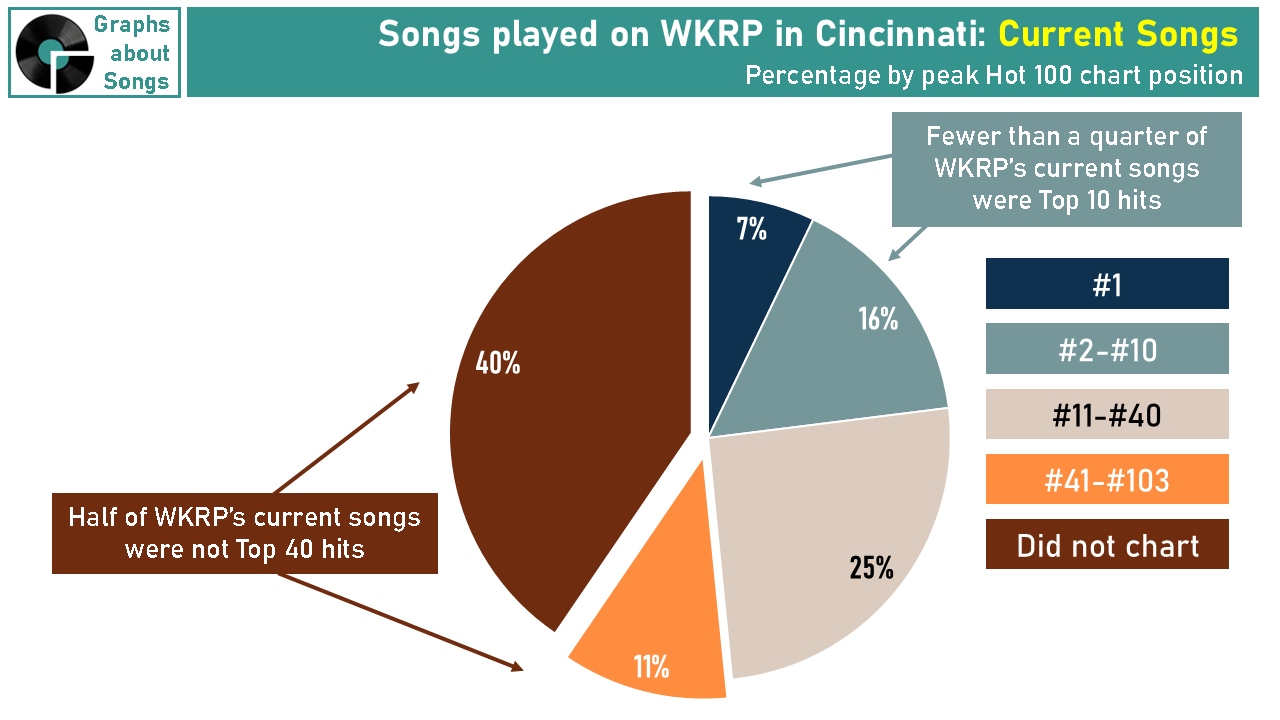
Drilling down to the Current songs, WKRP in Cincinnati played even fewer big hits. The show featured nine #1 current hits, including “The Long Run” by The Eagles, Kool & the Gang’s “Celebration,” and Blonde’s “Heart of Glass.” However, fewer than a quarter of the current songs on the station were Top 10 on the Billboard Hot 100.
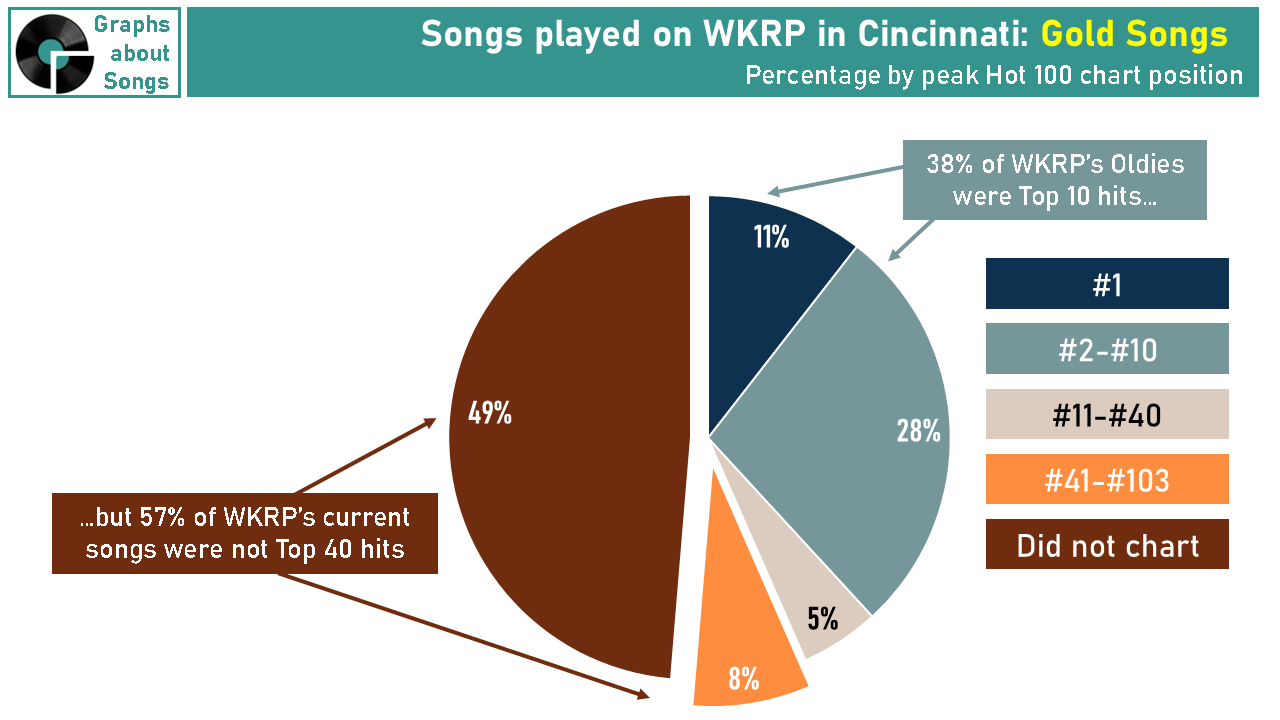
When a Top 40 station airs older songs, they’re generally songs that were once massive hits. While about 38% of WKRP’s Oldies were Top 10 hits, over half never even reached the Top 40:
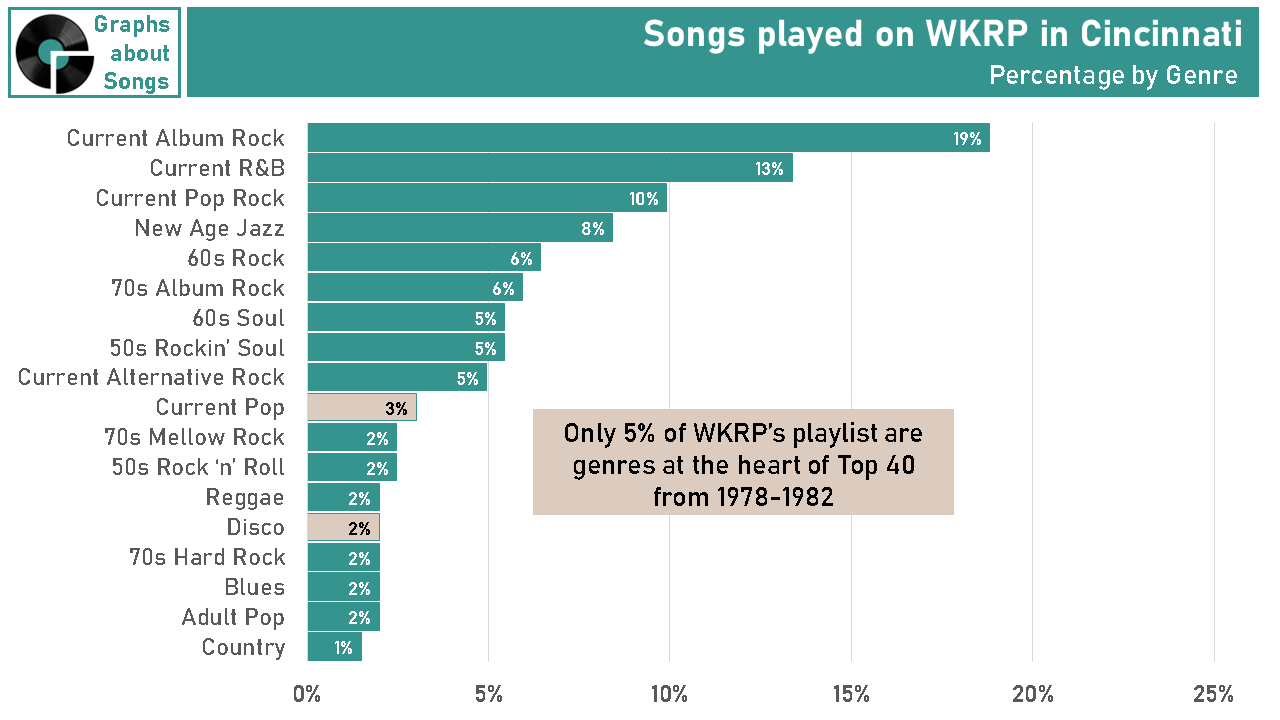
When examining which types of songs WKRP in Cincinnati aired, a scant 3% were the kind of Current Pop songs that were the backbone of Top 40 radio from 1978 to 1982:

So rare was it that WKRP in Cincinnati actually played massive current hits that Andy Travis got excited when Johnny played one.

Beyond playing Chic’s “Dance, Dance, Dance (Yowsah, Yowsah, Yowsah),” in the pilot episode, WKRP in Cincinnati was also notoriously anti-disco, No Top 40 station could have ignored disco in the late 1970s,
There was a popular format where hating disco was de rigor: Rock radio.
An Album Rock Station? Note quite.
When WKRP in Cincinnati program director Andy Travis announced the station’s new format to morning host Johnny Caravella, he said it was “Rock ‘n’ Roll” while unveiling a poster of Kiss The first song Johnny played was Ted Nugent’s 1975 album cut “Queen of the Forest.” That song wasn’t a Top 40 hit, but was a well-known cut on Nugent’s self-titled debut album in 1975.

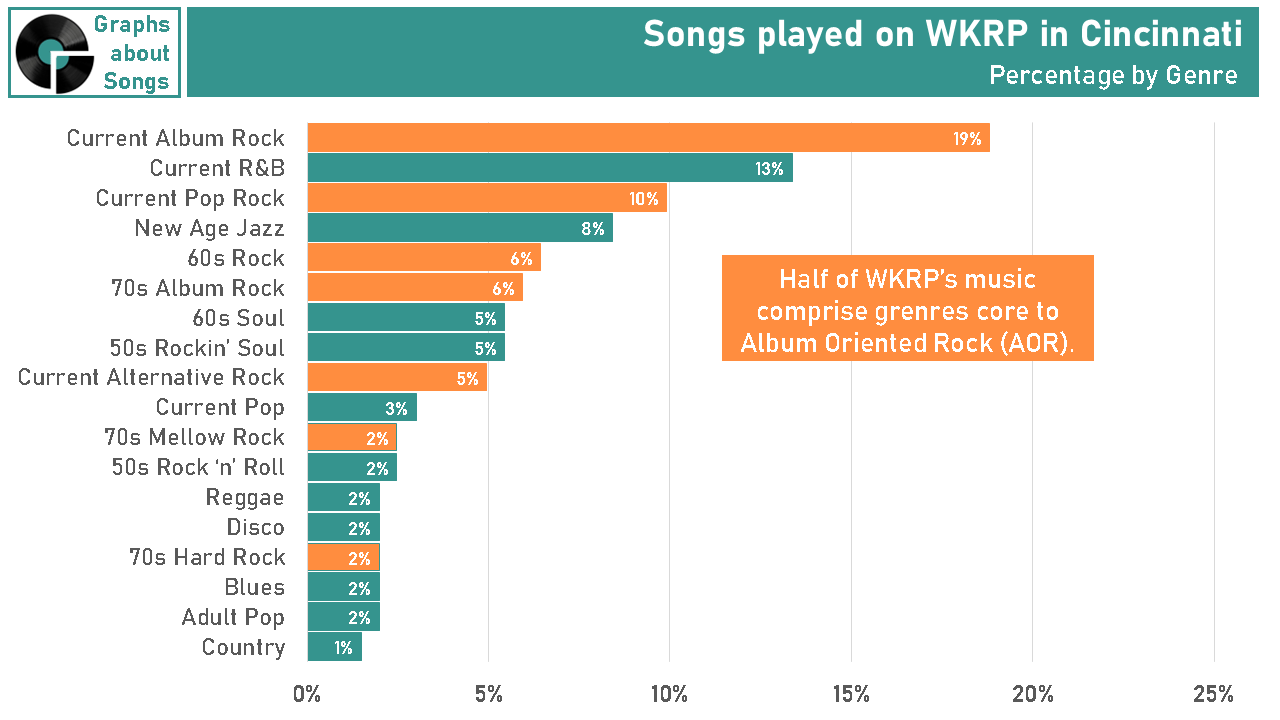
19% of the station’s overall airplay was Current Album Rock—exactly the songs you’d hear on the era’s FM Album Rock stations. An additional 10% were the Pop-friendly Pop Rock tracks.


Album Oriented Rock (AOR) emerged in the 1970s as a highly popular radio format particularly among male teens and young adults who had no interest in hearing their Rock mixed with The Osmonds. Majny of the genres most enduring songs famously never appeared on a 45-rpm single and therefore because of—rules—never were hits on the Hot 100 chart. To hear them, you had to buy the entire album—hence “album rock”.
WKRP in Cincinnati played a lot of Album Cuts as currents…
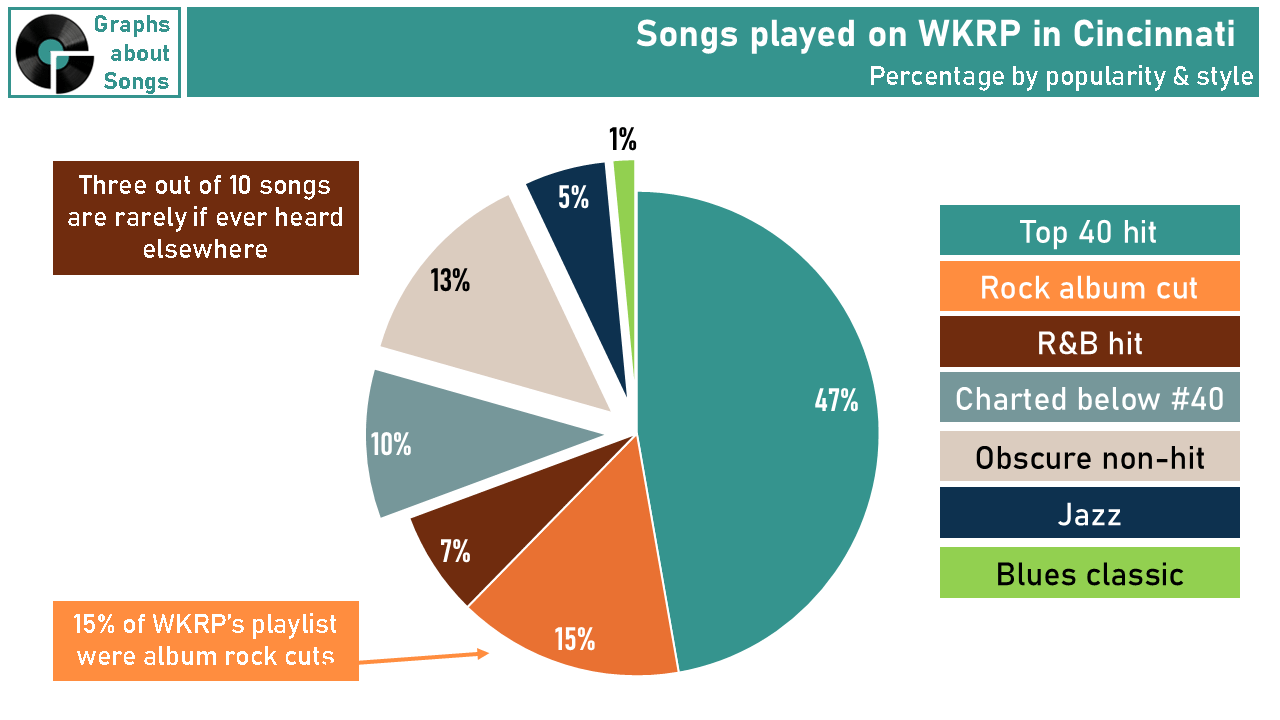
But what about these other genres, such as those obscure non-hits that weren’t well-known album rock hits? To understand WKRP in Cincinnati, you have to understand what was happening on FM radio ten years before the show debuted…
From Free Form Rock to Album-Oriented Rock
In the late 1960s, radio realized there was an audience segment that wanted to hear The Beatles and the Roling Stones, along with The Byrds and Bob Dylan, who didn’t want to hear Herb Alpert or Petula Clark. They also embraced the laid-back Hippie aesthetic that was in direct opposition to the hyper-kinetic Top 40 DJ style.
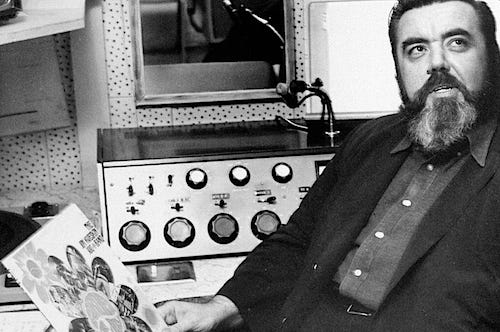
Tom Donehue, one of the earliest purveyors of the Free Form Progressive Rock format at KMPX and KSAN San Fancisco, envisioned the station being everything Top 40 AM radio wasn’t. As Johnny Fever himself Howard Hessman explained in The FM Radio Revolution in San Francisco,
[Tom] wanted a radio station that sounded like you were in the living room of a friend who had the most amazing stereo system imaginable and a tremendous collection of records and impeccable tastes.
The DJ might play the same song by Janis Joplin, Big Mama Thorton, and Blind Lemon Jefferson.
Here’s an example of how Free Form Rock sounded on KMPX San Francisco in 1967:
A young radio programmer Lee Abrams realized that while Rock fans rejected the Pop titles that hit music stations played, they still wanted to hear the songs they knew and loved most.
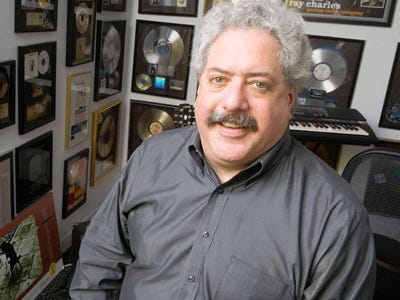
Abrahms hypothesized that the “hits” were the artists themselves and their best-selling albums: Led Zeppelin, Pink Floyd. The Rolling Stones, The Eagles. Kiss, The Who, Jethro Tull, Black Sabbath and Lynard Skynyrd. The difference is that the Rock listener who loved “Black Dog” would also be down for hearing “Over The Hills and Far Away.”
He envisioned a Rock station that had the vibe of Free Form Rock, but with the researched programming and on-air discipline of Top 40 AM radio.
When he was only 19, Abrams put his ideas to the test in 1972 when 94.7 WQDR Raleigh, North Carolina became the first consulting client for his “Superstars of Rock.” They went from nowhere to #1 among 18- to 34-year-old men almost overnight.
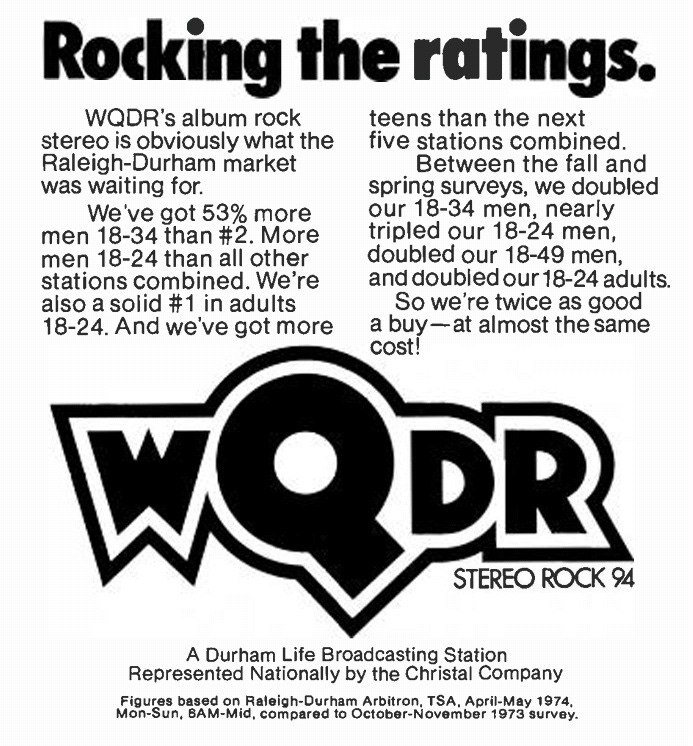
The guy on the air still had that laid-back, stoner vibe, but he would no longer say or play what he wanted: He’d keep his banter short and relevant—artist, title, the station name, and promotional announcements. He’d also not pick the music. Abrams surveyed record store album sales and called listeners to ask which album cuts they were digging. That research determined every song that aired.
Compare how Raleigh’s WQDR sounded in 1978 (click here for recording) compared to KMPX a decade earlier…

Notice anything else missing?
Black artists.
With the exception of Jimi Hendrix, the new Album Oriented Rock (AOR) format was completely white. Artists including Sly and the Family Stone, Ritchie Havens, Steve Wonder, and numerous Blues artists, simply didn’t show enough promise in research for Superstars.
WKRP in Cincinnati was clearly not a client of Lee Abrams.
They had far more in common with those Free Form Rock stations of the late 1960s than with the research-driven focused Rock stations that were its contemporaries. Consider the relatively obscure 70s Album Rock tracks WKRP in Cincinnato played:

Then there was Johnny Fever’s true musical passion
Today’s article is brought to you by my day job.
“Subscribe to my service and I’ll write you a good report.”

The Soul of Solid Gold
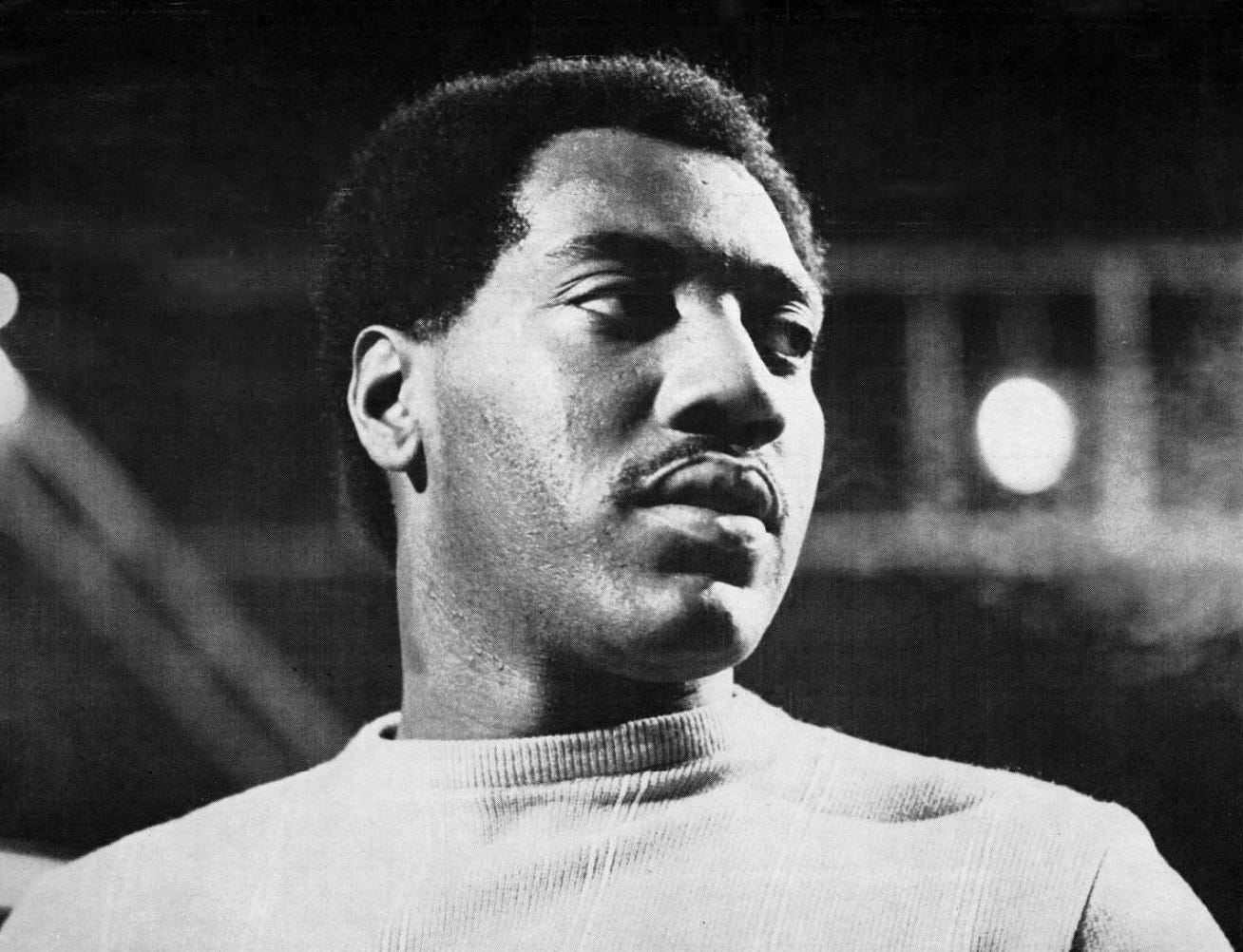
As Johnny Fever’s character developed, he became an ardent supporter of a specific breed of Rock’ ‘n’ Roll oldies that played an increasing role on his morning show: From the 60s, Johnny preferred R&B artists---but not the polished sound of Motown or Philly Soul. Instead, Johnny played soul artists such as Otis Redding and Wilson Pickett, artists from the rural south maintaining the raw rock energy that made Rock ‘n’ Roll popular in the 1950s. 60s Soul comprised 5% of WKRP in Cincinnati’s airplay:

That’s almost as much as the pure Rock titles from the 1960s:

Johnny Fever even went back to the 1950s, preferring the original Black artists such as Chuck Berry and Little Richard over the white grifters. 50s Rockin’ Soul comprised 5% of WKRP in Cincinnati’s overall airplay:

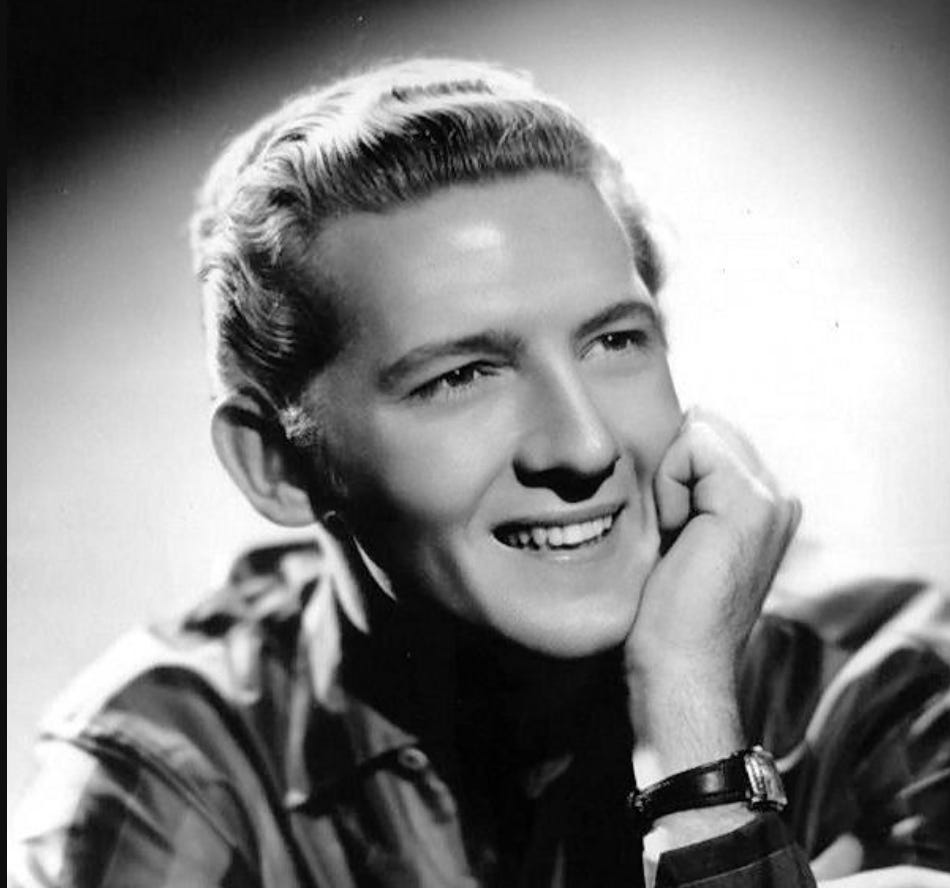
When the station did play white Rock ‘n’ Roll artists, Johnny stuck to the ones who understood the assignment: Jerry Lee Lewis and Carl Perkins, not Bobby Darin or Fabian:

Finaly, Johnny even mixed in enough Blues to make it 2% of the station’s playlist:

Honoring these heritage artists was unheard of at Album Oriented Rock (AOR) radio in the late 1970s—but it was very common at Free Form Rock radio of the late 1960s
Rock’s cutting edge
Defining WKRP in Cincinnati as a throwback to Rock ‘n’ Roll’s roots has one major wrinkle; They played a lot of cutting-edge Rock. At the time, they called it New Wave. Now, we call it Classic Alternative. WKRP in Cincinnati played Missing Persons’ very first single. They played Talking Heads when they weren’t well known beyond CBGBs. Famously, they may have helped Blondie’s “Heart Of Glass” reach #1.

With respect for Rock ‘n’ Roll’s heritage, a willingness to play obscure album cuts, and its embrace pf the cutting-edge artists now considered alternative classics, WKRP in Cincinnati is a throwback to the Free Form Rock stations from the previous decade, right?
Before we label it a Rock station, we have to examine Venis Flytrap’s contributions:
Jazz on a Rock ‘n’ Roll station?
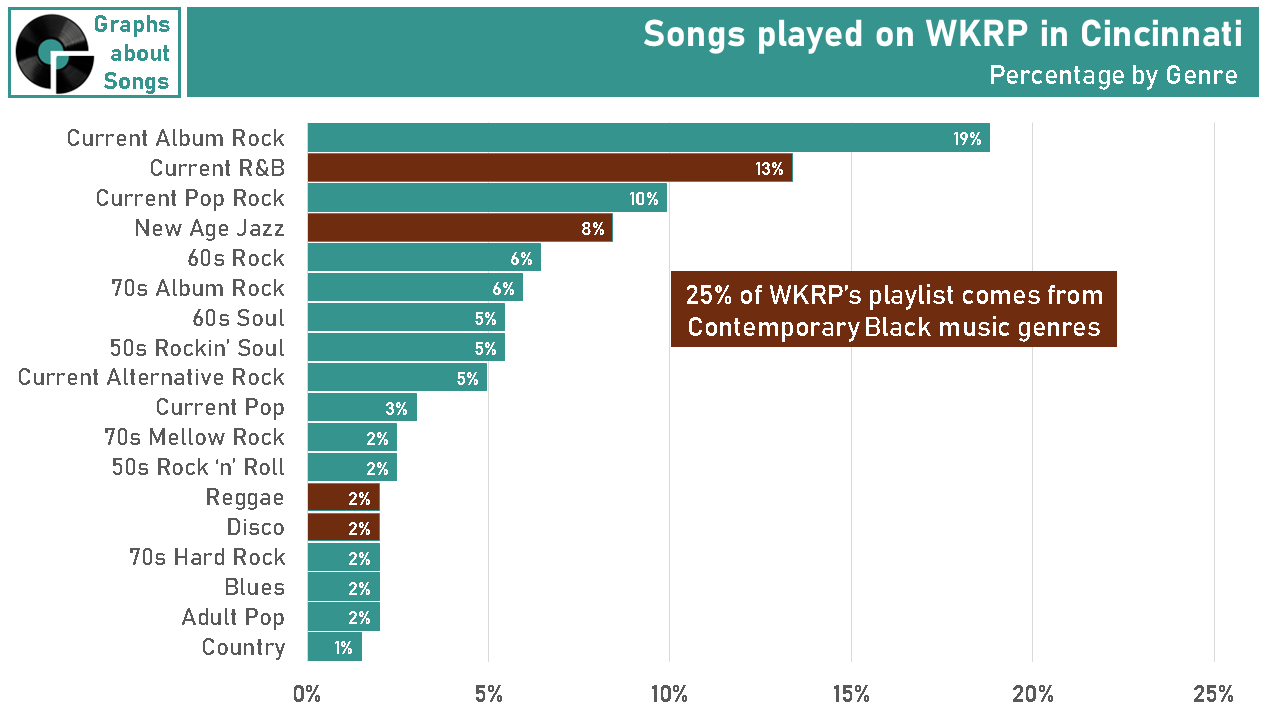
A big reason we can’t simply label WKRP in Cincinnati a Rock station is the significant share of music from Black artists in rotation. Largely thanks to Venus Flytrap’s show, 13% of the station’s playlist was contemporary R&B hits. Some, such as Kool & The Gang’s “Celebration” were massive Pop hits. Others, such as Luither Vandross’ “Never Too Much,” were huge hits on Black radio but largely invisible to Top 40 listeners.

What truly defined Venus Flytrap’s evening show—beyond the gong—was his prominent exposure of contemporary Jazz.
In 1967, Down Beat Magazine quoted guitarist Gabor Szabo out of context saying, “Jazz as we’ve known it is dead.” It wasn’t, but its cultural relevance was. Rock had usurped Jazz as the music defining youth culture in 1955.
Soon thereafter, a new school of artists began fusing Rock elements into Jazz, including Miles Davis, Chick Corea, Herbie Hancock, and Pat Metheny. By the mid-1970s, Jazz Fusion had a huge following amongst sophisticated adults. If Steely Dan was a bit too pedestrian for your tastes, jazz fusion was for you.
By the late 1970s, another group of artists emerged who created a more melodic, less experimental version of jazz fusion accessible to Pop fans. George Benson and Chuck Mangione even had Top 40 hits. Venus played a lot of this music, which not only made his show uniquely sophisticated, it made it multicultural.

So what format is WKRP in Cincinnati?
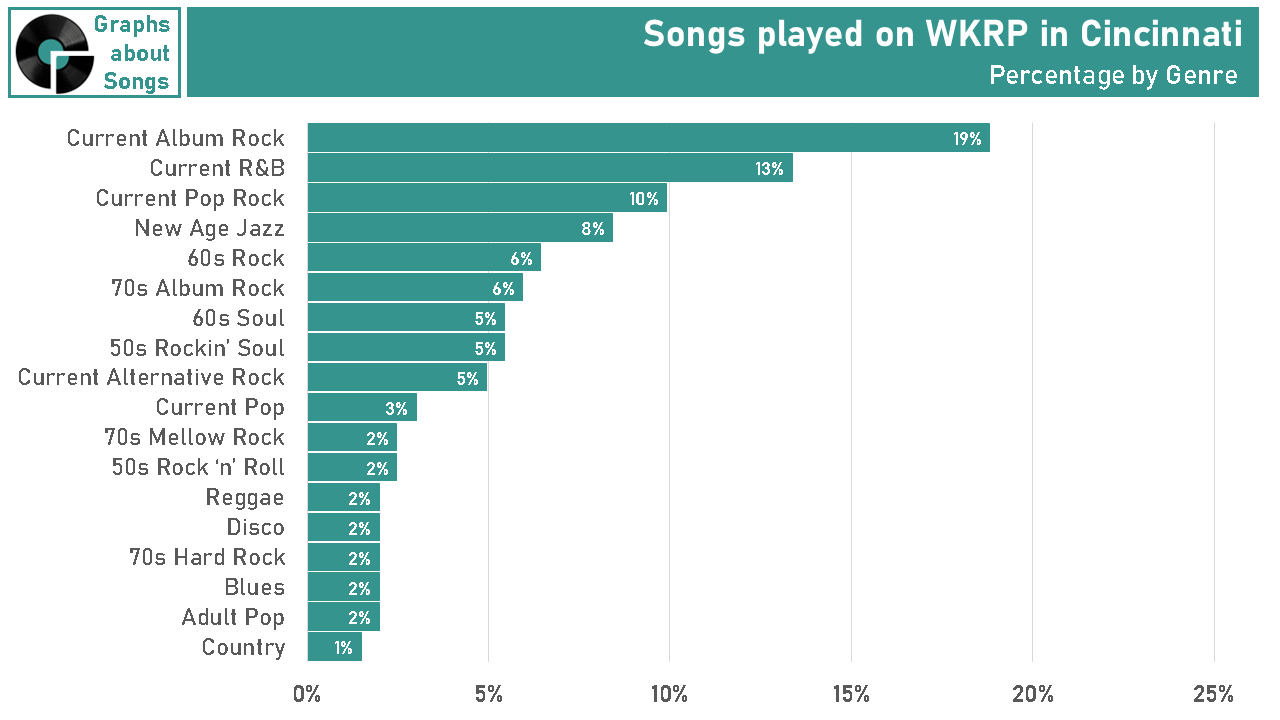
Putting it all together, here are all the different genres of music WKRP In Cincinnati played during the show’s four years:
Clearly, it’s not a Top 40 hit music station, with only 5% of the music at the heart of Pop radio during the late 70s and early 80s:
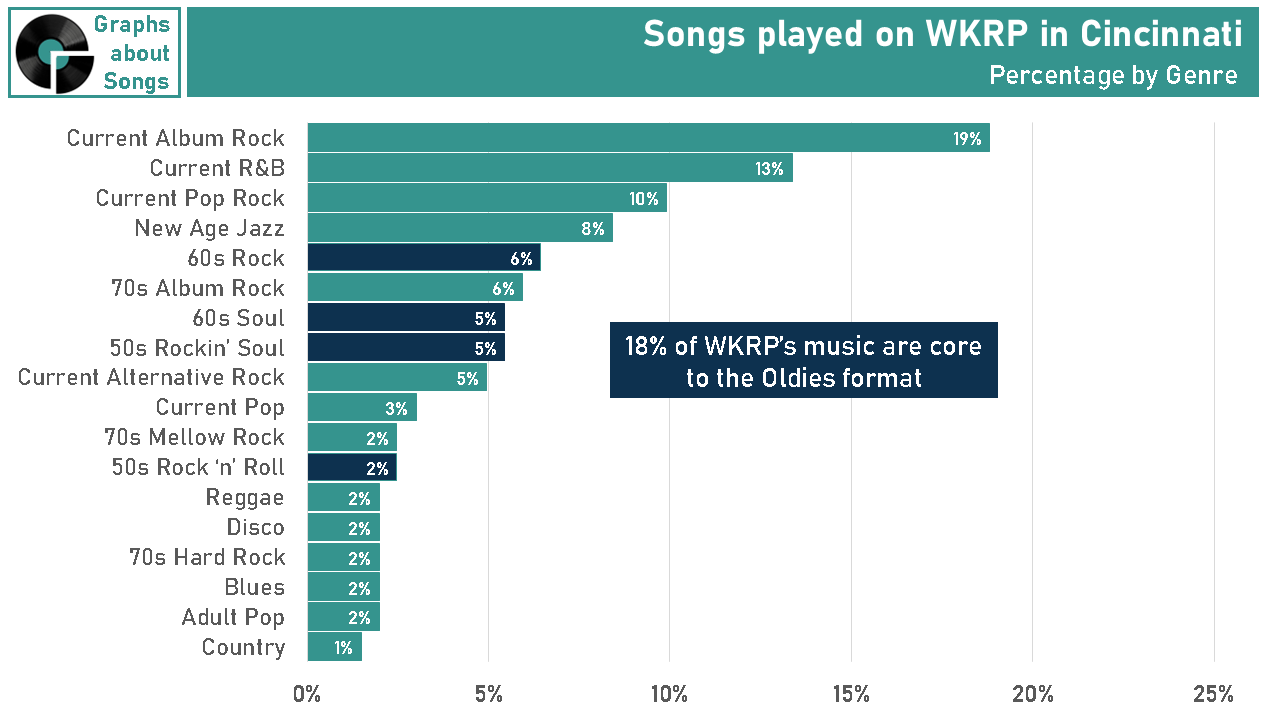
Furthermore, the station played a lot more Oldies than Top 40 Pop.
The majority of the station’s music was from the styles of Rock music you’d hear on the era’s popular FM Album Oriented Rock stations
… but WKRP in Cincinnati played music from Black artists that—by the late 1970s—no AOR station would touch.
Real life radio consultants operate honestly and above board—and have long been too old for cocaine—but the “radio doctor” Norris Breeze accurately represents what any consultant would tell Andy Traivs about WKRP when he concluded, “You’ve got problems here. […] Your format is all over the road.”

For a show that radio veterans describe as a frighteningly accurate portrayal of the folks you’ll meet in radio, the most unrealistic aspect of WKRP in Cincinnati is the programming itself.
Competing against 700 WLW, Q102, or 102.7 WEBN in 1978, WKRP in Cincinnati would have been a woefully unsuccessful station
Which is exactly why its music is so damn interesting.
Experience WKRP in Cincinnati yourself
You can find just about every song WKRP in Cincinnati played on this Spotify playlist.

Be the first to know when I turn your favorite music into PowerPoint graphs
Choose the “FREE” option to get Graphs About Songs’ stuff like today’s article directly in your inbox.
If you program Pop music, “The Hit Momentum Newsletter” is my weekly analysis of the Spotify 200 that finds the songs that could be huge hits on your CHR or HOIT AC station. It’s yours every Monday for a paid subscription below.
Did WKRP In Cincinnati boost a song’s chart position just by being featured on the show? This slideshow tackles that question: WKRP In Cincinnati: Charting each song’s performance
A Real life Rock station played New Age Jazz at night—-and got its highest ratings doing it! Here’s the story of how 94Q (WQXI-FM) Atlanta launched a new age jazz show at night that ultimately became the station’s most popular show. (94Q’s General Manager, Gerry Blum, was Hugh Wilson’s inspiration for Arthor Carlson.) From Friends of Georgia Radio: The Story of WQXI-FM/94Q’s “Jazz Flavours” With Don Benson, Fleetwood Gruver, and Russ Davis f
Data sources for this article:
Mike Hernandez, “WKRP Song List”, Document shared on Google Drive, retrieved May 15, 2026: https://docs.google.com/spreadsheets/u/0/d/14x1AnN8KV1MH3RYlnKR6FgOFuZ_-Qm-OUvuZo8G38kE/htmlview?pli=1#gid=546540654
Billboard Hot 100 charts: https://www.billboard.com/charts/hot-100/
I LOVE this article. I didn't get into radio and really understand formats until after the show was done, but I did watch the show during its original run, and even then, in my youth, I thought it was weird that Johnny Fever had a completely different playlist than Venus did. But then years later, Triple A appeared in my hometown, and I decided that's what WKRP was... a little bit of almost everything!
Your mention of 94Q is interesting--first and foremost that WQXI AM 790/FM 94.1 was the inspiration for WKRP in Cincinnati.
At the show's premiere, 94Q was a "Rock 40" station; playing a mix of poppy album rock and Top 40. Later (around 1980) 94Q "aged with the boomers" and went hot AC.
WQXI AM stuck to its top 40 lane before switching to oldies, although over the years they did simulcast some dayparts.
In the 70s, WQXI had a contest called the "Summer Jam" which was snippets of 6 songs crammed together. So the show got the Contest Nobody Could Win from Quixie as well.
Regarding Jazz Flavours (yes, that was the correct spelling), when 94Q flipped to Star 94, Blum insisted that Jazz Flavours remained even though part of the purpose of the flip was to dump it and lean in a more top 40 direction, because sales were so good.