


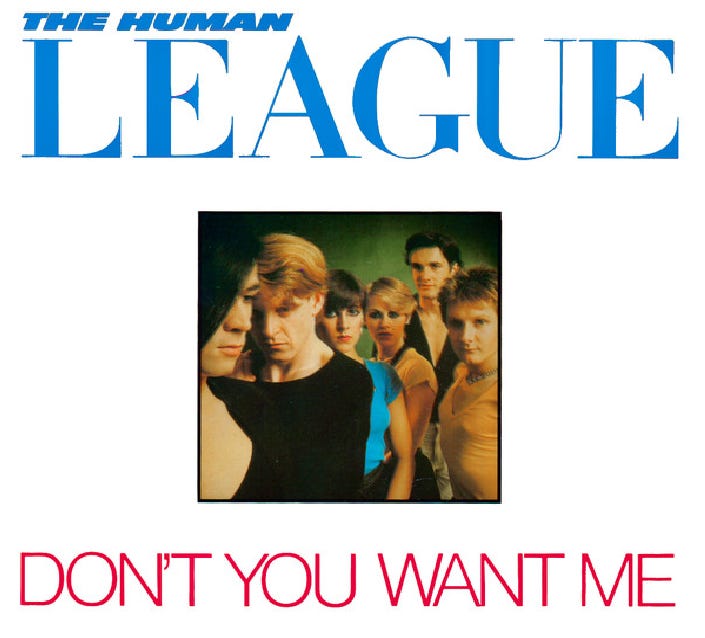
Comparing a group with only two #1 hits to the greatest band of all time might cause some of you to get the vapors.
And yet, I’m here to argue that the Human League’s “Don’t You Want Me” launched for 80s kids what The Beatles’ “I Want to Hold Your Wand” did for American teens in 1964.
During the July 4th holiday of 1982, “Don’t You Want Me” was the #1 song in the U.S.A. It kicked off a run of 23 different Top 10 hits on the Billboard Hot 100 from synthesizer-based acts—most from the United Kingdom—during the next 18 months.
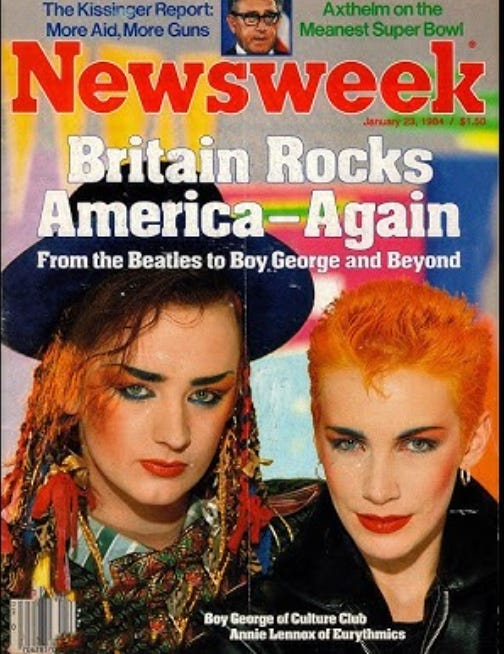
Rolling Stone magazine called this chart phenomenon “The Second British Invasion,” a term referencing the first British invasion when The Beatles legendarily opened the American charts to fellow British acts from The Rolling Stones and The Kinks to the Dave Clark Five and Herman’s Hermits.
At the time, it was even bigger than the first, with Rolling Stone noting:
[O]n July 16th, 1983, upon which date no fewer than 18 singles of British origin charted in the American Top Forty, topping the previous high of fourteen, set on June 18th, 1965. There are now more British records on the U.S. charts than at any other time in pop history.
They added…
Leading the charge has been that strange animal variously called “New Wave.”
Today, Graphs About Songs explores the explosion and disappearance of the genre that defines Eighties music, gave Generation X its own genre, and ultimately helped launch Alternative the following decade. While the press coining it “The Second British Invasion” stems superficially from the genre’s biggest acts’ U.K. citizenship, the comparison with the original British invasion runs deeper than you’d expect.
“Don’t Call It Punk”
No generation has been more flagrantly and unrestrictedly the target of marketing than Generation X. That’s true for the first music genre we alone embraced.
Sire Records’ Seymour Stein had brought punk to America with The Ramones. However, he was increasing frustrated with every act he repped that played CBGBs being called “punk.” He found the term personally derogatory, poor for marketing, and not a far description for innovative acts such as The Talking Heads, Blonde, and The Pretenders. These bands weren’t The Sex Pistols and there was no reason they shouldn’t be on the radio.
So in 1977, Stein launched the “Don’t Call It Punk” campaign to encourage use of the term “New Wave” for several of his artists. He copped the term from the French Nouvelle Vague (“New Wave”) film genre, which broke conventions of storytelling and cinematic editing. Stein felt his acts were similarly groundbreaking for music.
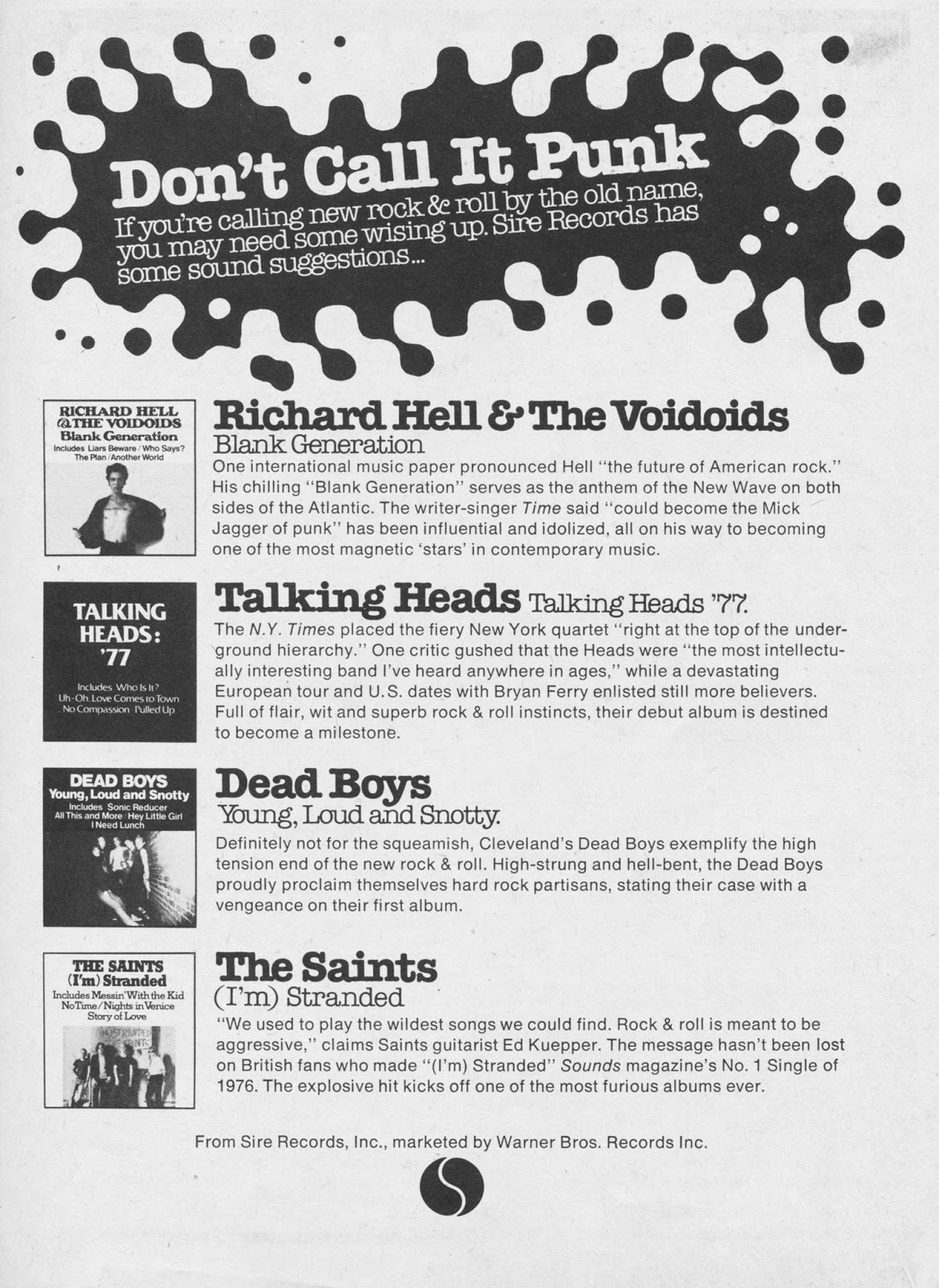
While Talking Heads were Stain’s idea of New Wave, the term Stein coined ultimately defined a subgenre of songs that was more Pop than Rock, more mainstream than experimental, and way more British than American.
The First New Wave Hits
Two titles became Top 10 hits before The Human League officially launched the New Wave Revolution.
In 1979, Robin Scott created a pseudonym for his synthesizer-based project. As “M”, he became a true U.S. one-hit wonder with the song “Pop Music.” It reached #1 on the Hot 100 in November 1979, foreshadowing the next decade’s Pop music
Gary Numan already had hits in the U.K. His group Tubeway Army reached #1 with “Are Friends Electric?” They weren’t acoustic. As a solo artist, he intentionally sought to make his former band’s sound more poppy and accessible, which he did with his first release “Cars,” which reached #1 in the homeland and #9 in the States in 1980.
(And for everyone astutely shouting, “where’s Devo’s 1980 inspirational manifesto ‘Whip It,’” that one peaked at #14.)
You’ll notice these songs peaked before August 1st, 1981.
MTV fills the AM/FM radio void
The Buggles “Video Killed The Radio Star” famously launched the new cable channel playing music videos around the clock, although MTV wasn’t nearly as focused on new wave acts as we remember it. At first, they’d play anything with a video.
And there were a lot of British new have acts already making music videos.
Among younger viewers, MTV replaced radio as the place to discover new music. At that time, the glory days of the AM Top 40 stations that dominated the 60s and 70s were over, while many of the legendary FM hit music stations of the 80s hadn’t established themselves.
A prime example is New York: Muiscradio 77 WABC segued from Top 40 to an adult-oriented approach in 1980 before switching to Talk in May 1982—which radio fanatics call “The Day The Music Died.” Z100 wouldn’t launch as the new FM hit music station until August of 1983—famously taking the station “from worst to first” in 74 days.
During that gap, 14 new wave hits were Top 10 during that time—and the #1 place to discover them was MTV.
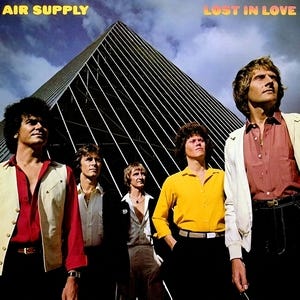
If you had a hit music station in the early 80s, they were catering to adults, not you and your fellow teens. A post-disco hangover left “hit” music stations playing Air Supply, Chriostopher Cross, and lots of Country crossover. Along with arena rock acts including REO Speedwagon and Journey.
By the time Contemporary Hit Radio (CHR) resurged on FM, it was thanks to the music MTV made popular. MTV was now calling the shots on new music. Radio was a follower.
The New Wave Explosion
On March 1, 1982, MTV launched its “I Want My MTV!” campaign. The phrase became so burned into the cultural zeitgeist I fully expect Xers at memory care facilities in the 2040s to randomly demand their MTV.
It wasn’t merely a clever slogan. It was a call to action for cable subscribers to contact their local cable TV provider and demand it add MTV to the lineup.
By that metric, it worked: MTV’s subscriber base grew from 3 million to 9 million Americans during 1982. That viewership growth caused another important change: In mid-1982, Record labels, seeing that MTV exposure boosted record sales, began producing music videos specifically to promote actively to MTV.
In the middle of “I Want My MTV” came a song with a video produced by Steve Barron, the producer Quincy Jones would soon recruit to create Michael Jackson’s video for “Beat It.” Barron would later create other genre-defining videos, including for A-Ha’s “Take On Me” and Dire Straits’ “Money For Nothing.”
As Stereogum senior editor Tom Breihan writes in his book The Number Ones:
The “Don’t You Want Me” Video had a sense of mystery, and that helped it stand out. MTV started playing the video before The Human League even had an American record deal. […] Other songs had capitalized on MTV success, [such as] Olivia Newton John’s frisky Dance Pop single “Physical.” […] But Newton-John was an established star. […] “Don’t You Want Me,” on the other hand, was pure MTV.”
After “Don’t You Want Me,” four New Wave songs topped the U.S. Hot 100 chart through 1983.
Australia’s Men at Work scored two #1 hits with “Who Can It Be Now” and “Down Under,”
Eurythmics had “Sweet Dreams (Are Made Of This),
The Irish band Dexys Midnight Runners topped the Hot 100 with “Come On Eileen.
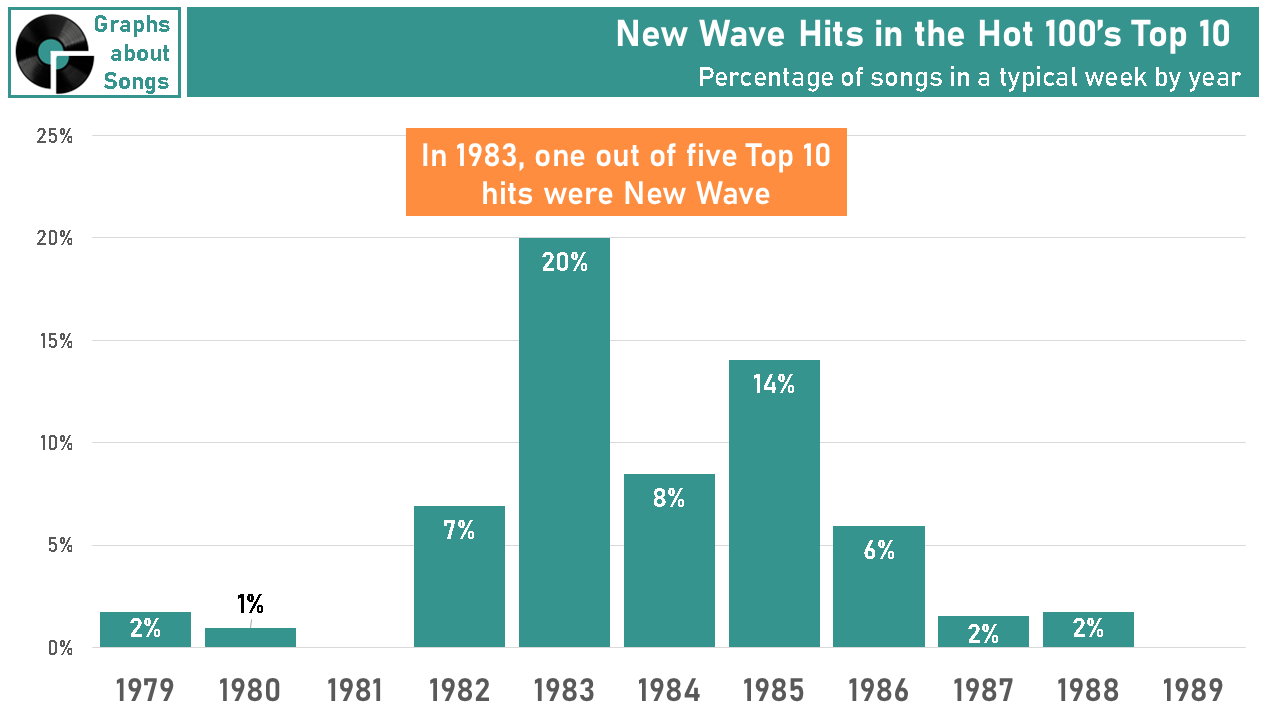
Another 10 New wave hits reached the Top 5 from July 1982 through 1983, including three from Duran Duran. Some remain radio staples today, such as Spandau Ballet’s “True.” Others such as Kajagoogoo’s “Too Shy?” You just had to be there.
Even the Americans were getting in on the second British invasion: Talking Heads, the CBGBs band Seymour Stein invented “New Wave” to describe, had their first Pop hit with a song true to what the genre became with “Burning Down The House.”
The German Invasion
While the U.S. was newly obsessed with New Wave, Germans were embracing a new wave of their own: Neue Deutsche Welle (“New German Wave”) was a highly popular subgenre of songs that were often quirky, sometimes dark, and always auf Deutsch. Young Germans had predominantly embraced English-language Rock and Pop music since The Beatles. Neue Deutsche Welle was arguably the first mass-appeal youth genre of the Rock era that was both uniquely German and actually in German.
The Spider Murphy Gang’s “Skandal Im Sperrbezirk” sounds like catchy synth-Pop song, but the lyrics of “Scandal In The Red Light District” explore a Munich prostitute.
So strong was America’s New Wave obsession at its peak that we even imported German New Wave. Some of them even in German: Nena’s 1984 cold war classic “99 Luftballons” was a bigger hit than the English version. Falco’s “Rock Me Amadeus” first became a hit in German before a bastardized spoken word English version emerged.
Falco’s “Der Kommissar” became an English language hit thanks to a faithful reproduction by the U.K.’s After The Fire. Germany’s Taco made the 1920s Erving Berlin standard “Puttin’ On The Ritz” a New Wave hit.
(And for the astute asking about Peter Schilling’s “Major Tom (Coming Home),” that he recorded in both German and English… That one—like Whip It—peaked at #14).
New Wave declines—along with “Music” Television
After the 1985 New Wave crest, the wave quickly broke. The Pet Shop Boys had most of the last New Wave hits, with 1988’s remake of Willie Nelson’s “Always On My Mind” appropriately being the last.
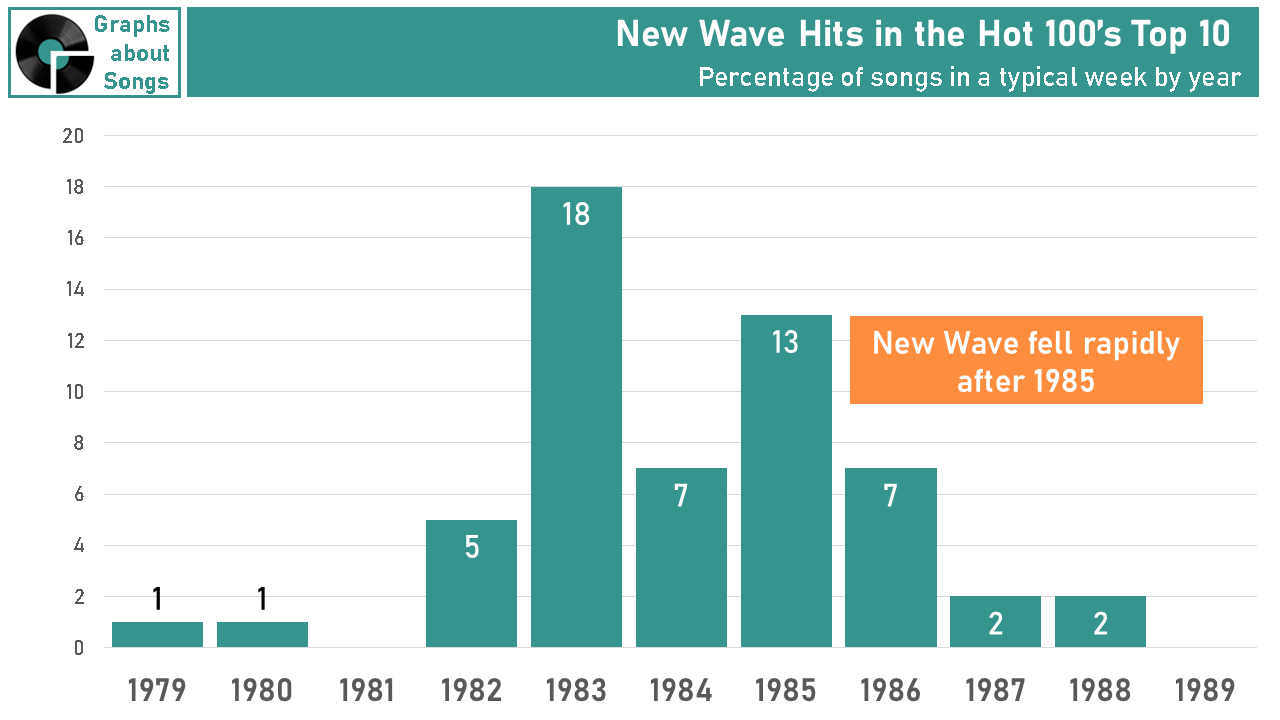
The American Rock revenge—think Bon Jovi, Guns and Rosaes, and late 80s hair metal—quickly took over both MTV and hit music radio. (More on that below). Beyond the charts’ tops, however, The Smiths, The Cure, and New Order, helped create a growing youth subculture that ultimately made Alternative mainstream in the early 1990s.
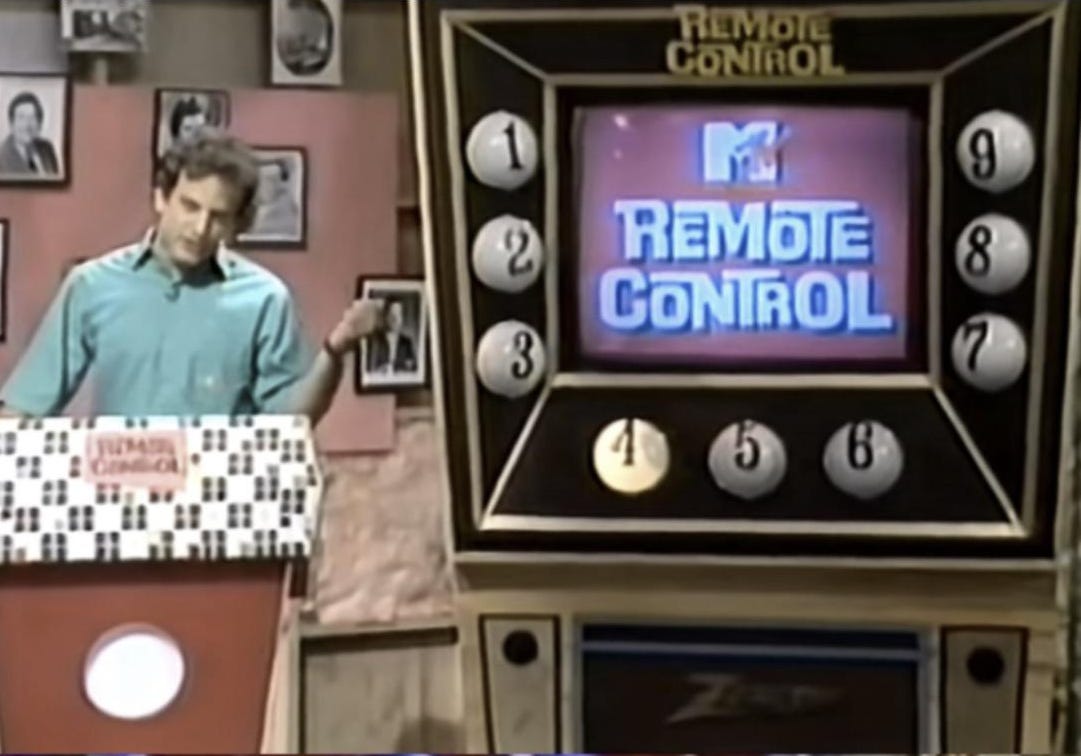
In 1987, MTV launched the game show “Remote Control,” the first long form show on the network. Club MTV soon followed, which ditched the VJs for a more traditional approach to presenting music on TV akin to American Bandstand.
In 1992—the same year Alternative went mainstream—MTV launched The Real World. While it was revolutionary in creating the modern reality TV genre, it marked the end of MTV’s mission to be a Rock radio station on TV and instead be an adolescent entertainment network.
Five ways the British Invasion and the Second British Invasion are similar.
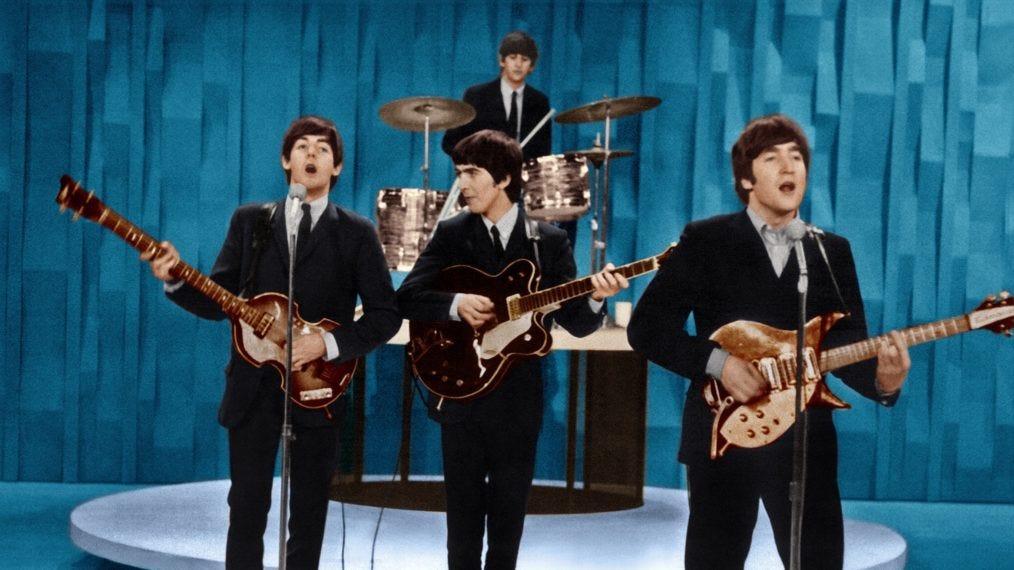
On February 9, 2027, you’ll likely see a blurb on socials from the news media commemorating the 63rd anniversary of The Beatles’ appearance on The Ed Sullivan show—an event 40% of America watched live. There will be no celebrations of the first MTV airing of “Don’t You Want me.” And yet, both British Invasions are comparable in five key ways:
1) Both seemingly happened suddenly:
When the Beatles’ “I Want To Hold Your Hand” became a hit, the impact was so sudden Capitol Records wasn’t even ready to promote it. Before the Beatles, only two British artists had #1 hits in the U.S. during the Rock era.
Ultimately The Beatles unprecedentedly owned the entire Top 5 of the Hot 100 by April 1964. In their wake, the labels sent America every British band they had. The Rolling Stones, The Kinks, The Zombies, The Dave Clark Five, Peter and Gordon, Gerry and the Pacemakers, Manfred Mann, Chad & Jeremy, and The Searchers had major hits in 1964 alone.
This pattern eerily matches the New Wave genre. Only two New Wave songs had been Top 10 hits before 1982. Then—suddenly—New Wave dominated hit music.
2) Both burned bright and ended rapidly:
On April 23, 1966, for the first time since 1964, no British act appeared in the Hot 100’s Top 10. It was the beginning of the end for the British, invasion, largely considered dead by 1967. Likewise, The New Wave explosion waned dramatically in 1986 as music tastes changed. At its height, however, there were more British acts on the U.S. charts during the Second British Invasion than there were during the first.
3) Both were replaced by harder rocking American sounds:
Starting in 1967, American hit music tastes shifted back towards the homeland, with The Monkees, The Association, Tommy James and the Shondells and Aretha Franklin dominating the year’s biggest Pop hits. Meanwhile, Rock was becoming harder, with The Doors, Jefferson Airplane, and The Jimi Hendrix Experience becoming popular during the Summer of Love.
Likewise, the quirky mass appeal Pop sounds of New Wave gave way to American artists with harder edges, such as Bon Jovi and Guns ‘n’ Roses, British bands Def Leppard and Whitesnake copied the American style that defined the second half of the 1980s.
4) Both fundamentally changed the course of Pop music long after fading:
The Beatles ultimately spawned those 1970s Rock legends we now collectively call Classic Rock. Likewise, New Wave’s synthesizer-based experimentation and lyrical quirkiness opened a lane for artists such as The Smiths, The Cure, and The B-52s, as well as more underground artists such as The Sundays, Camper Van Beethoven, The Replacements, and They Might Be Giants. These artists helped create a growing youth subculture that ultimately made Alternative mainstream by the early 1990s.
5) Both marked when a new generation took control of picking the hits:
When The Beatles landed at JFK, the Boomers officially seized control of picking the hits from their older siblings the Silent Generation. That’s the generation too young to be World War II heroes and too old to be hippies. First, the Silents replaced Big Bands with intimate jazz combos and romantic crooners in the late 1940s, much like Gen Z has replaced EDM with Bedroom Pop in the 2020s. Next, they made Rock ‘n’ Roll America’s dominant youth music seemingly overnight when “Rock Around The Clock” hit #1 in 1955. In 1964, however, it was the Boomers’ turn to pick the hits—and they gave Elvis’ crown to the British.
For New Wave, it was Generation X taking over from the Boomers. Tired of The Eagles and the Arena Rock that dominated Album Rock radio, their new cable music video channel gave young Xers a new genre they embraced as their own.
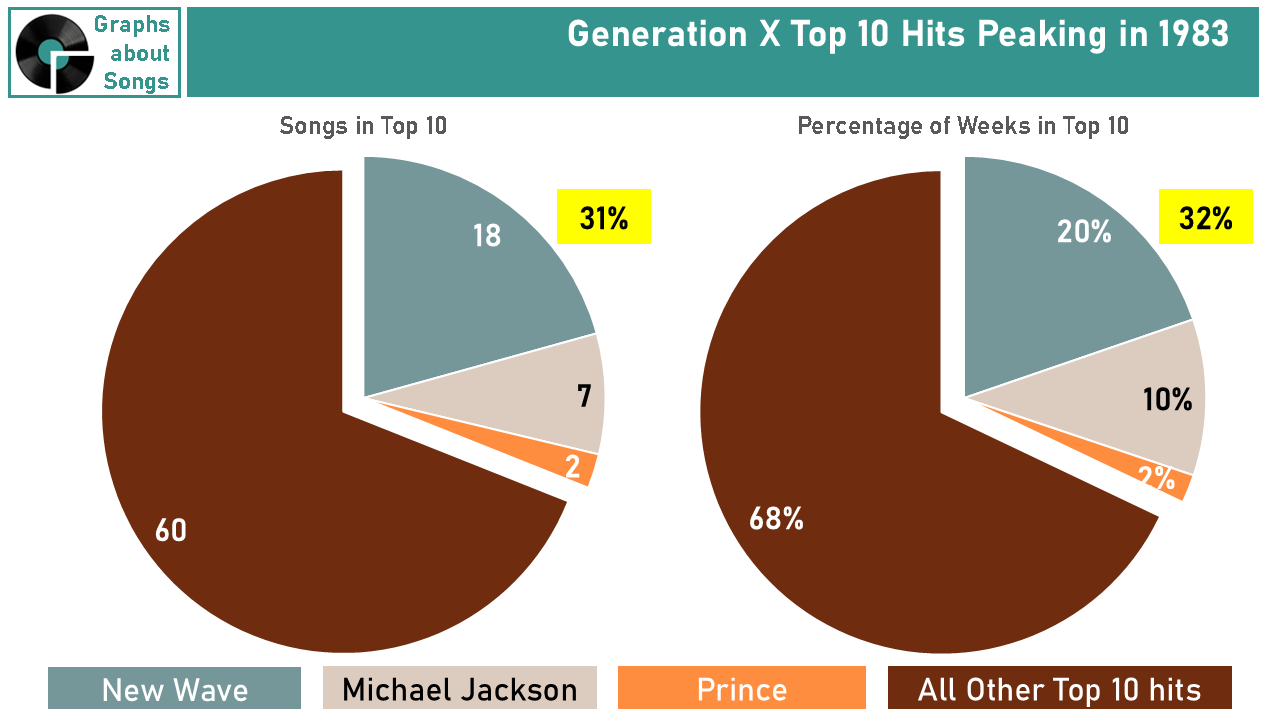
At the peak of the New Wave evolution in 1983, a third of he Top 10 hits in a typical week were either New Wave, from Michael Jackson’s Thriller, or from Prince.
When will the next “New Wave” arrive?
Radio programming legend Guy Zapoleon has long observed a repeated pattern in Pop music: His famous music cycle theorem notes that after a “rebirth”, where Pop music is fun and broadly, music enters an “extreme” phase, in which Rock and R&B diverge into harder and less mass-appeal styles. Pop music then enters “the doldrums,” where boring, adult-oriented Pop and Country dominate until another rebirth.
(That’s happening right now, as I noted in When the Adults Pick the Hits.)
Both the 60s British Invasion and the 80s New Wave were “rebirth” periods. The emergence of Acid Rock in the late 1960s and Hair Metal in the late 1980s were “extreme” periods.
Zapoleon notes that we’re currently in the longest “doldrums” period since Top 40 radio emerged in the 1950s.
My own Generational Music Theorem observes that Pop music experiences a mass appeal renaissance around the time the oldest members of a new generation turn 21, becoming the majority of new music consumers and, thereby, picking a new style of hits that suit their generation’s tastes. Boomers did it with the Beatles. Xers did it with New Wave. We are overdue. for Generation Z to launch their own New Wave.
Subscribe to Graphs About Songs and see the songs that stir your soul turned into PowerPoints:
If you’re a fellow chart geek: Click Choose the “FREE” option to get Graphs About Songs’ stuff like today’s article directly in your inbox
If you’re a fellow radio programmer: “The Hit Momentum Newsletter” is my weekly analysis of the Spotify 200 that finds the songs that could be huge hits on your CHR or HOIT AC station. It’s yours every Monday for a paid subscription below.
Further Reading:
The Number Ones: Twenty Chart-Topping Hits That Reveal the History of Pop Music by Tom Breihan, 2022: (Amazon link)
Stereogum: “The Number Ones: The Human League's ‘Don't You Want Me’” by Tom Breihan: https://stereogum.com/2086575/the-number-ones-the-human-leagues-dont-you-want-me/columns/the-number-ones
Stereogum: “The Number Ones: The Beatles' ‘I Want To Hold Your Hand’” by Tom Breihan: https://stereogum.com/2000395/the-number-ones-the-beatles-i-want-to-hold-your-hand/columns/the-number-ones
Data sources for this article:
The Billboard Hot 100: https://www.billboard.com/charts/hot-100
Wikipedia’s Billboard Hot 100 Top 10 singles: https://en.wikipedia.org/wiki/List_of_Billboard_Hot_100_top-ten_singles